Reliquaries Sculpture SeriesLayers of Reality Group Exhibition
December 13, 2025 to January 15, 2026 - Pandora Gallery, Berlin
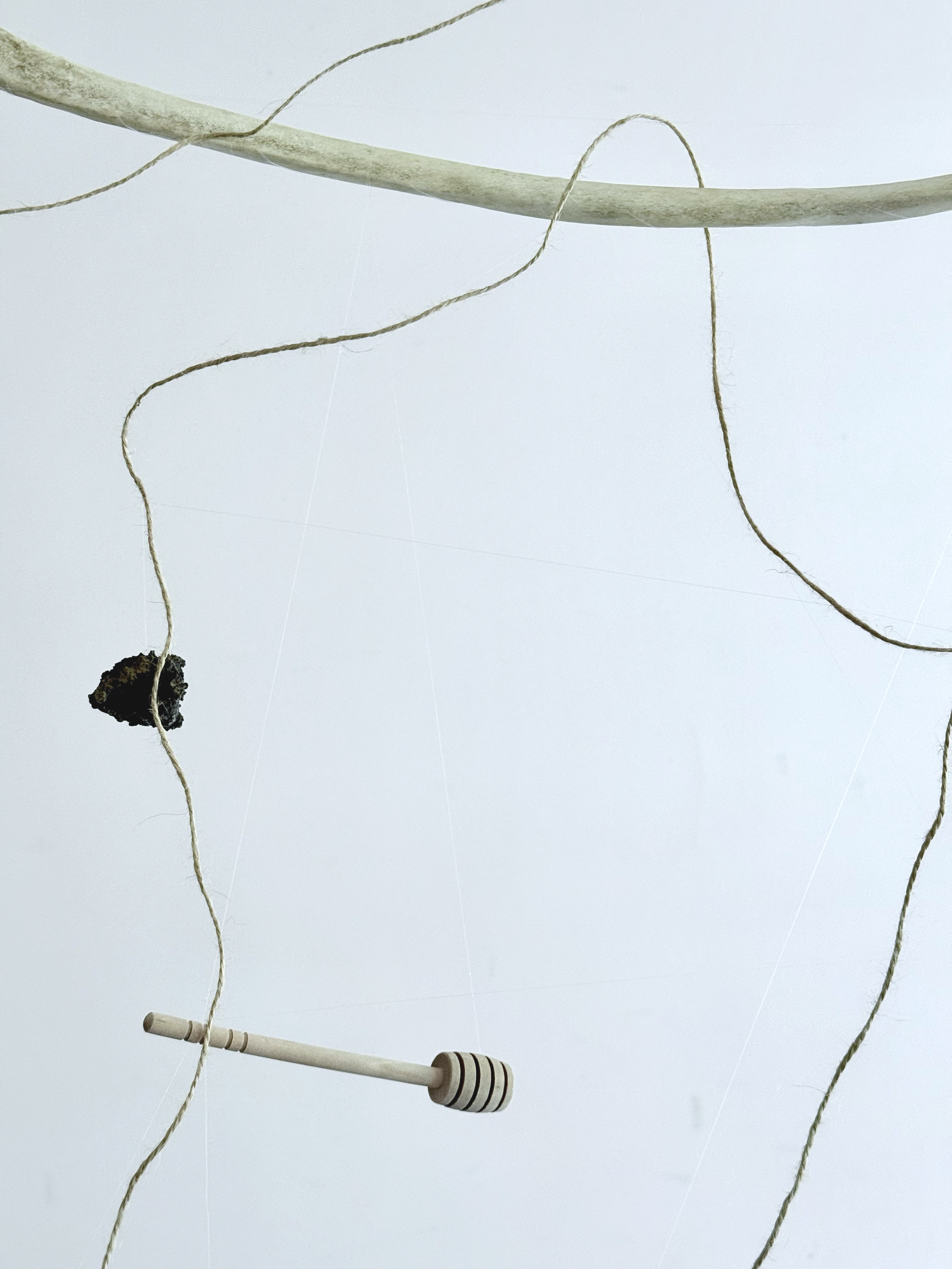
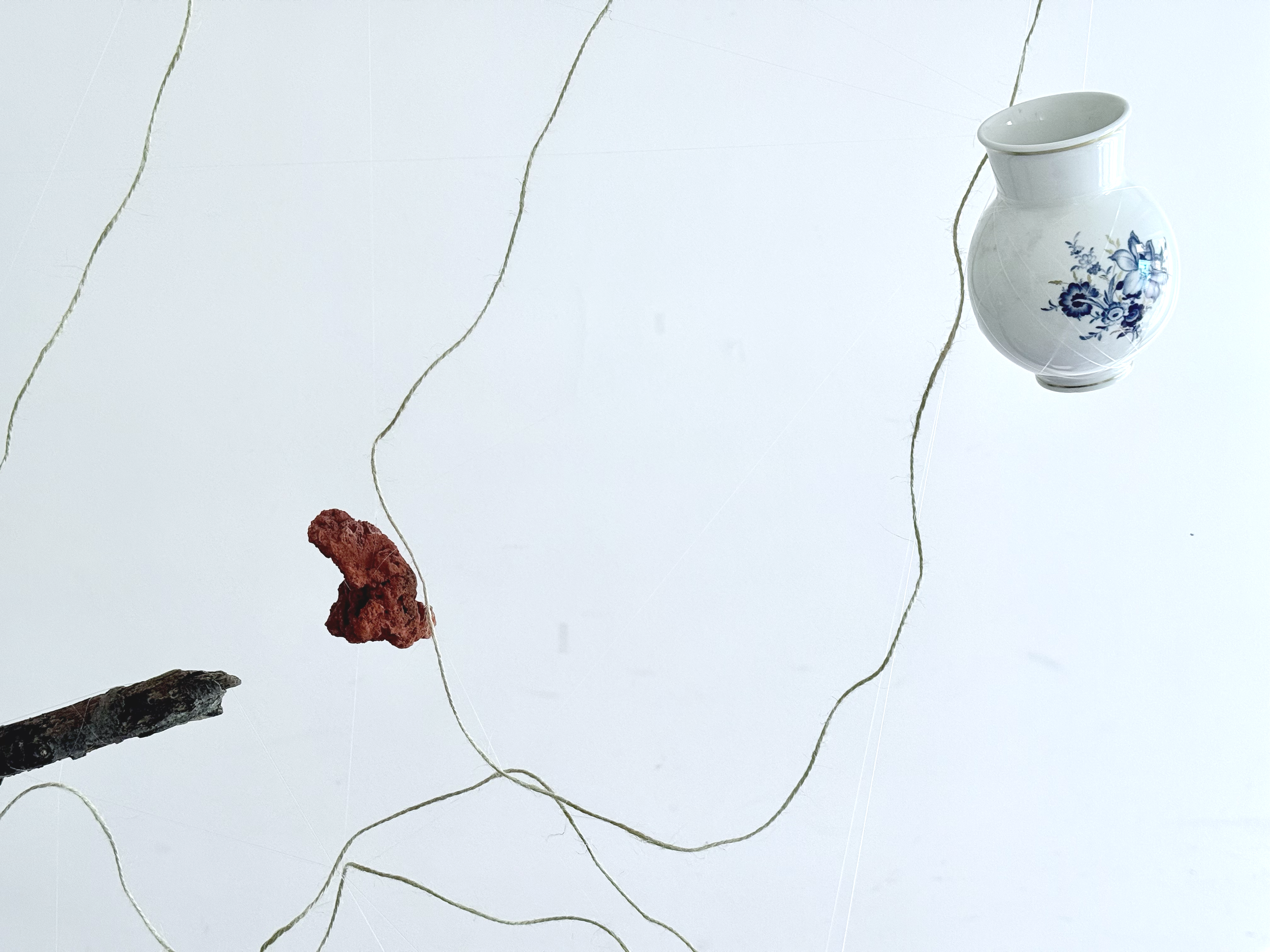
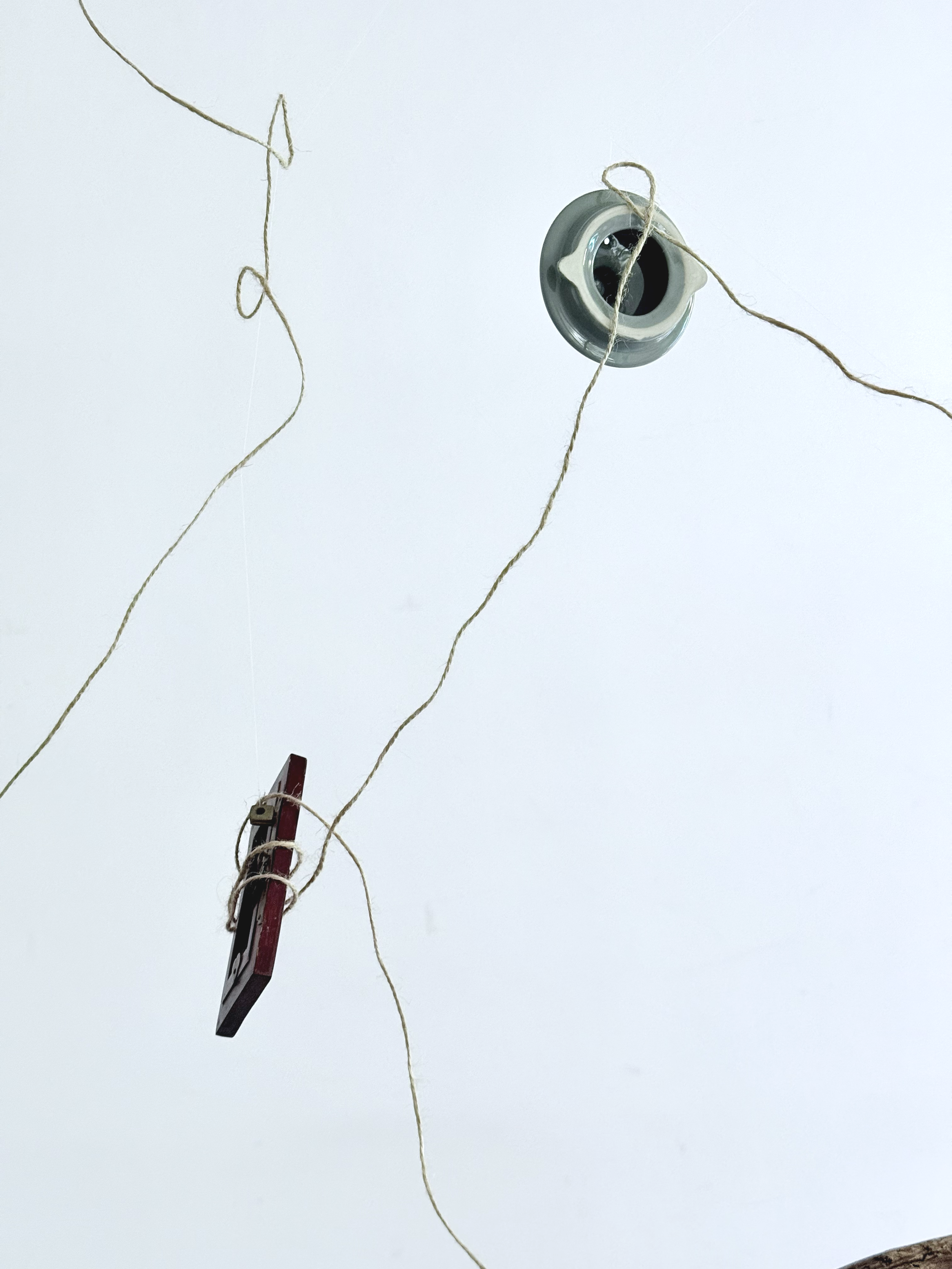
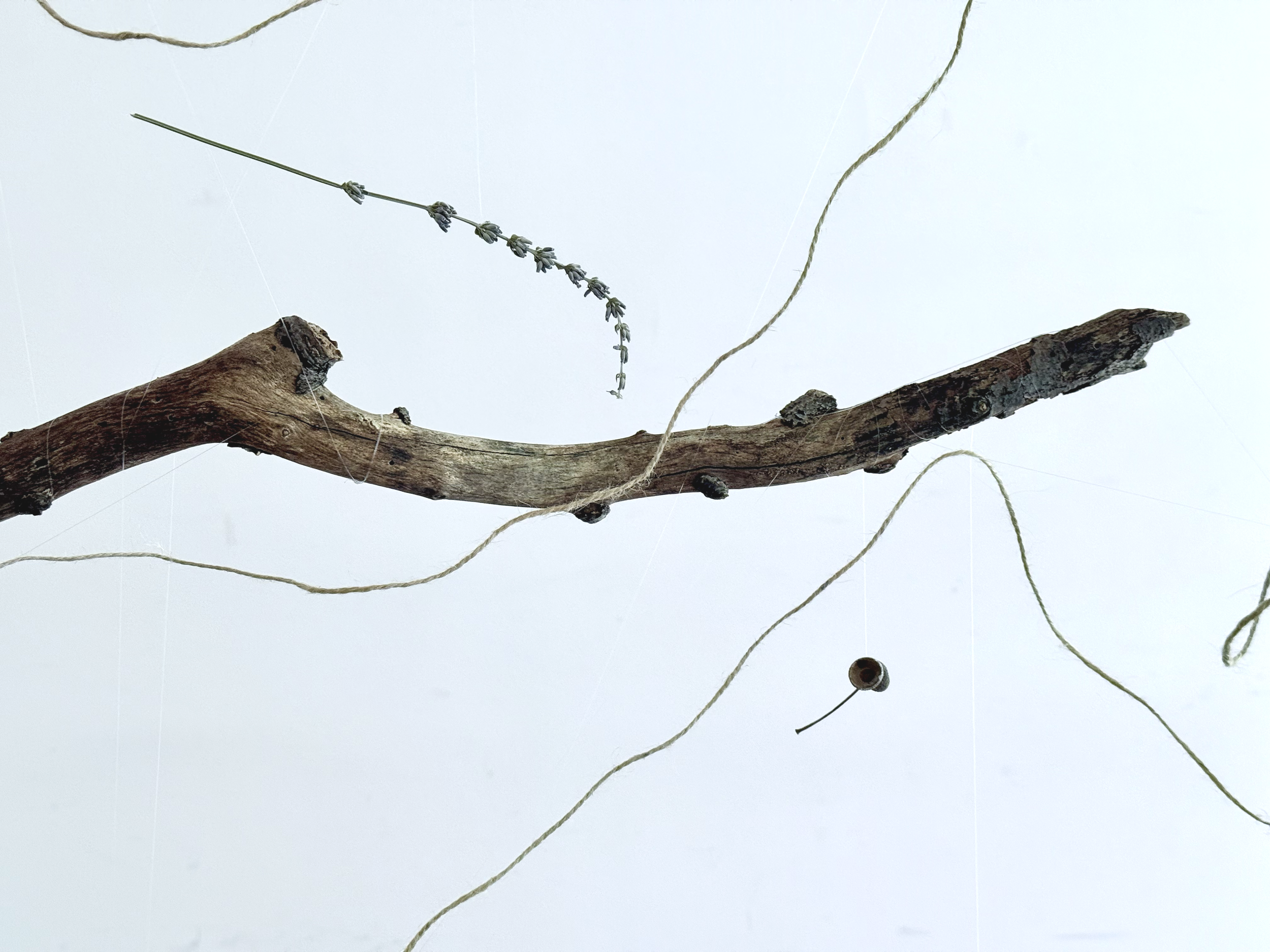
Situated between altar and ruin, these works operate as small monuments to what lingers, fractures, and transforms. Composed of salvaged and fragmentary materials, each sculpture explores states of suspension — between tension and fragility, presence and disappearance. The featured work takes the form of a floating altar, hovering in a timeless, shapeless liminality, held together by forces that feel both precarious and devotional.
Reliquaries forms part of an ongoing inquiry into material ecologies and architectures of grief, where objects become sites for memory, erosion, and quiet persistence.
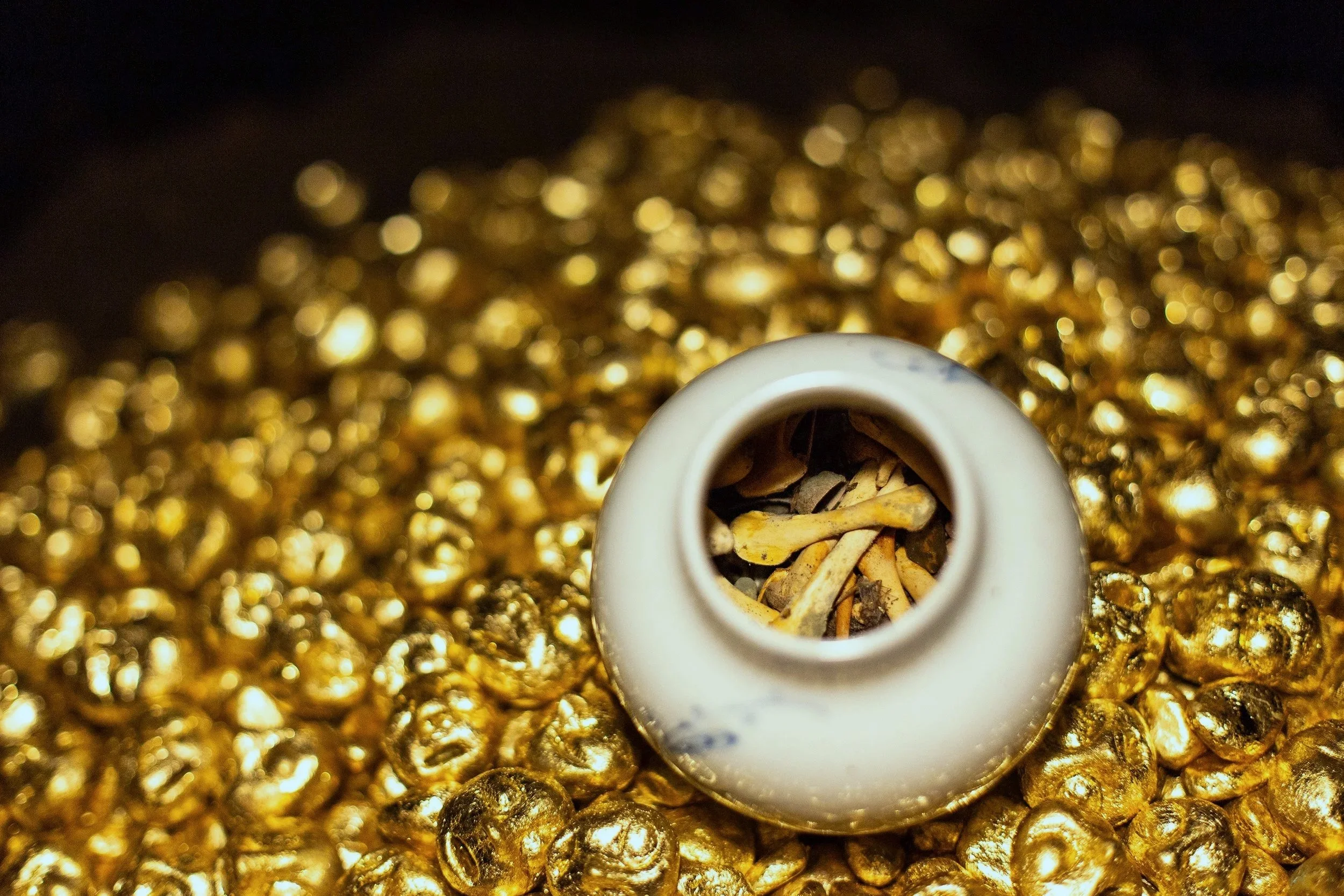
The Reliquaries series emerges from an inquiry into the aliveness of decay — an exploration of how matter, memory, and loss interweave through cycles of transformation. These sculptural and sonic works inhabit the porous threshold between composition and decomposition, articulating a language of becoming that belongs neither entirely to the living nor the dead. They are small worlds in the midst of change: vessels that breathe, ferment, and transform as the materials within them continue their slow conversation with time.
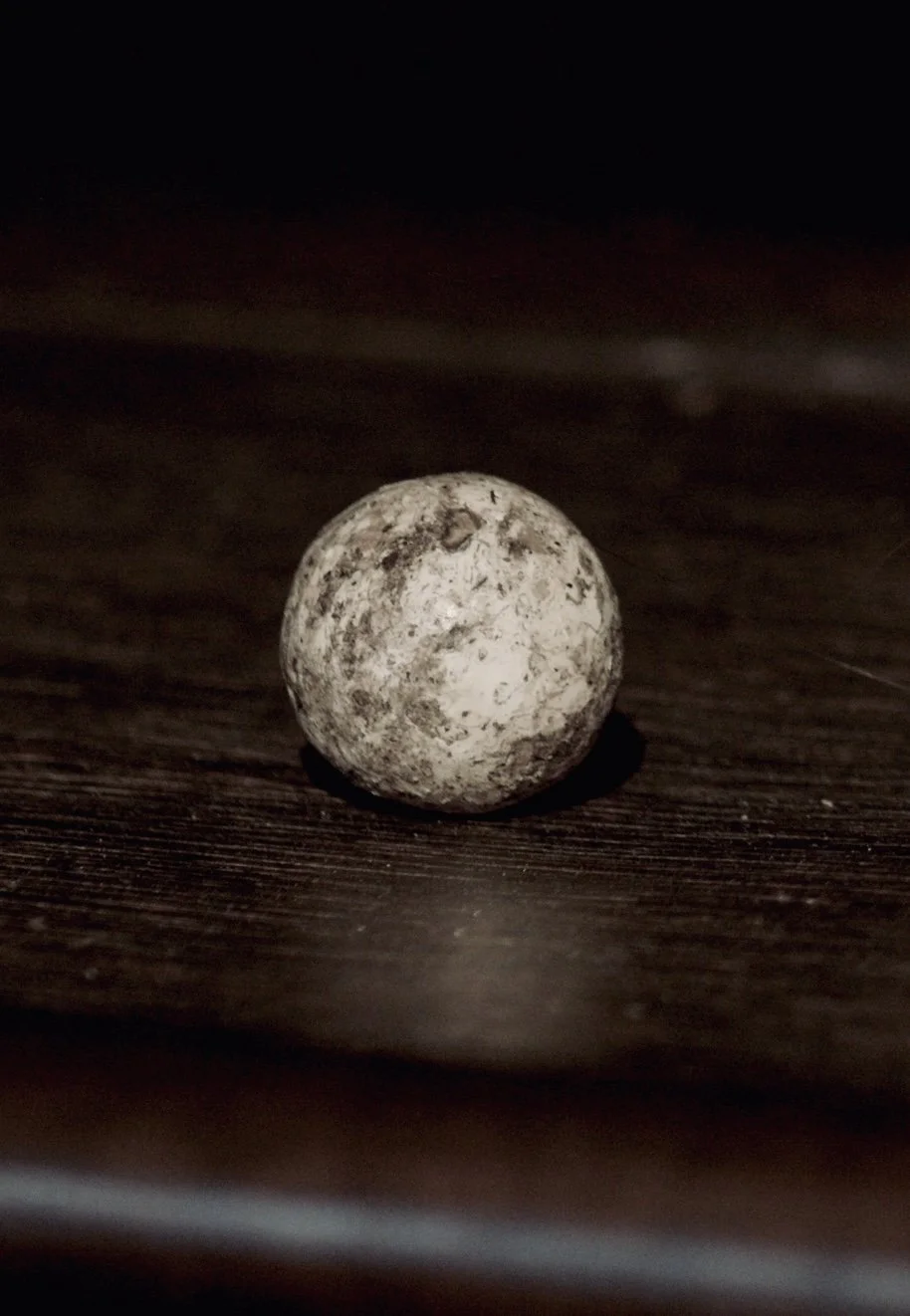
At the center of this constellation is (my) urn (a sealed ecosystem of fertile soil, tears, ashes, bones, and lavender) and future fossils (spheres of composted matter and memories, some crumbling, some polished). The urn and the fossils are kept intentionally alive. Mold, humidity, and mineral efflorescence appear and recede, forming microbial topographies that shifts with temperature and time. Within the reliquaries, decomposition is neither arrested nor sanitized — it is honored as an ongoing dialogue. The living and the dead cohabit; death is not an event but a condition of life’s continuation. To keep the reliquaries open and exposed is not to go against entombment, but to consent to the world’s symbiotic slow digestion.
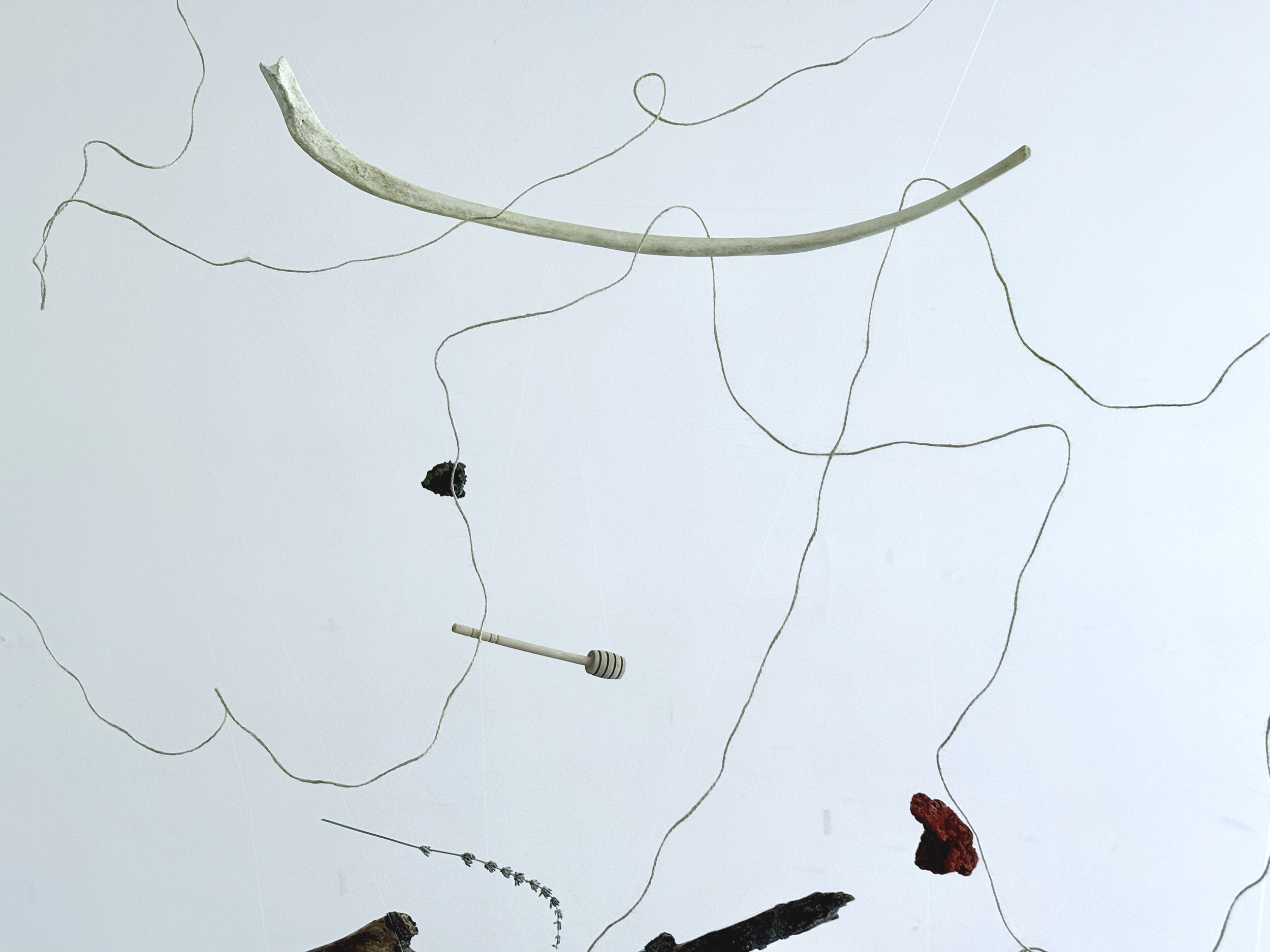
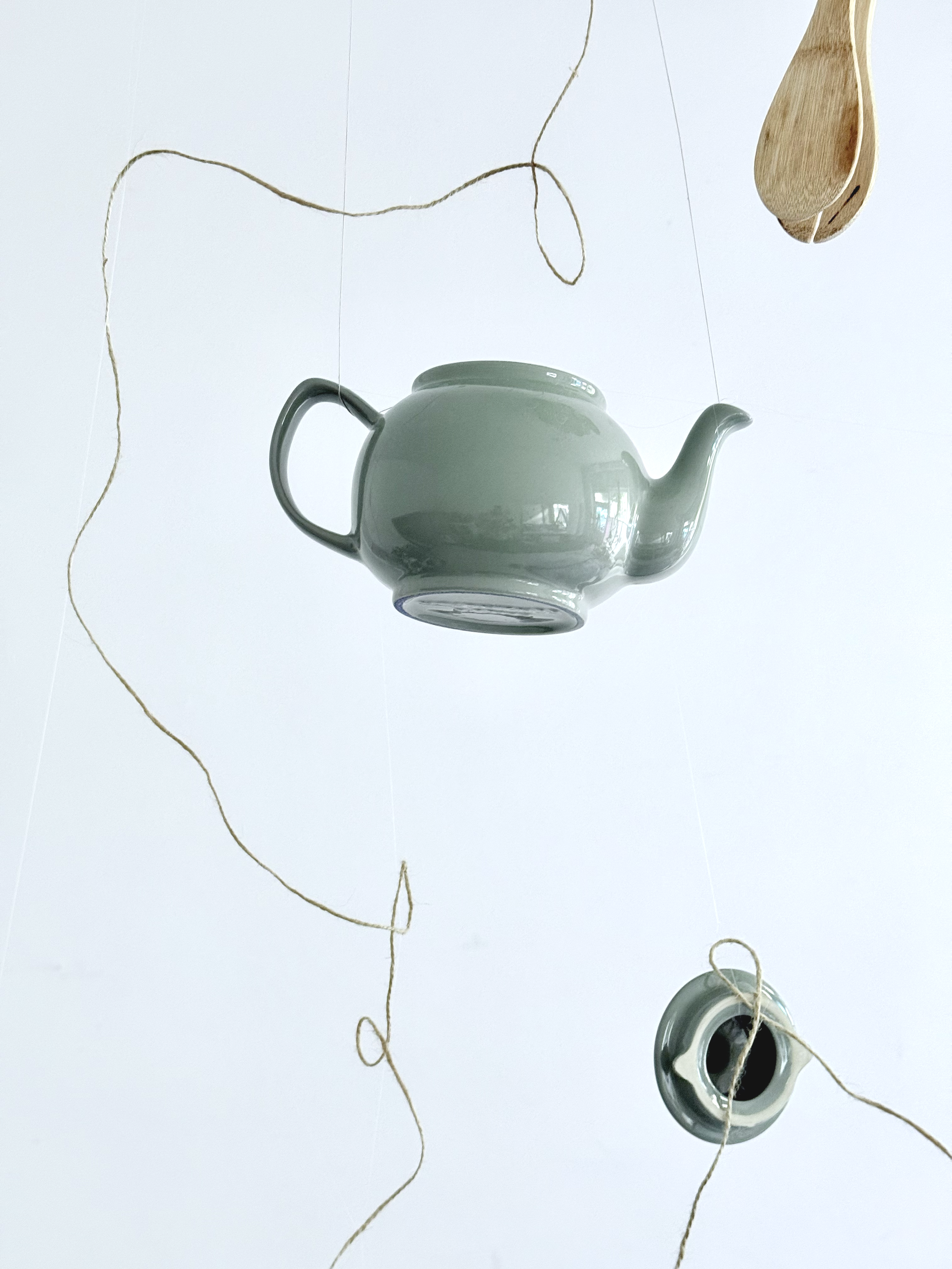
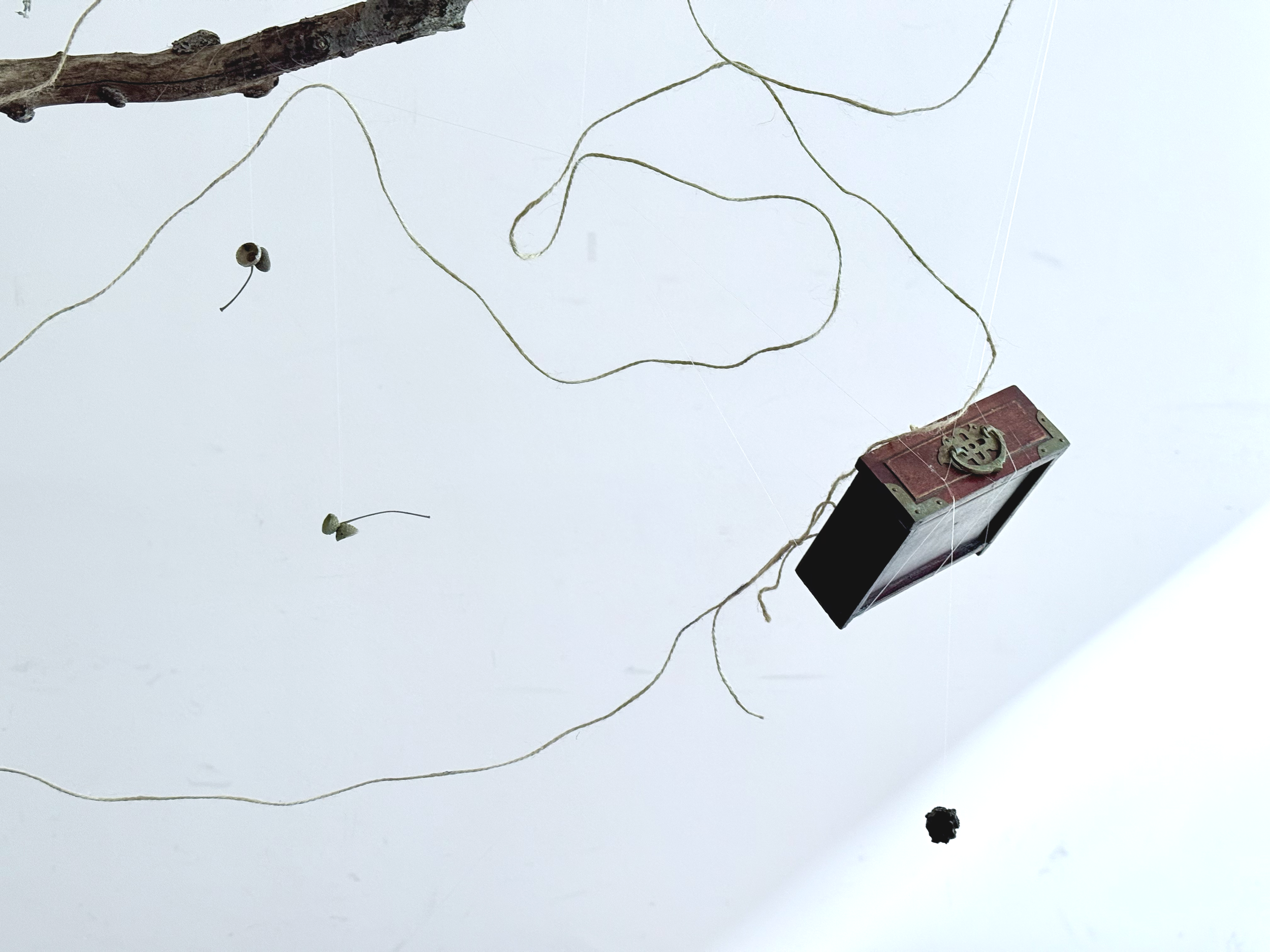
Suspended above it, an altar adrift extends this logic of continuation. Each hanging form is made from composted matter — bones, volcanic stone, twine, and fragments of everyday objects caught in liminal space. Together, they enact an ecology of grief: delicate, shakable, and in flux. The mobile is less an ornament than a weather system — a choreography of materials that respond to air, gravity, and moisture. Their suspension recalls the minor oscillations between presence and disappearance that define all living systems.
The theoretical ground of Reliquaries is what I call necromaterialism: an inquiry into the poethics of rot, or the ways that decomposition itself generates new modes of relation. The term draws from feminist materialisms — Barad’s intra-action, Haraway’s sympoiesis, Neimanis’s weathering, and Alaimo’s trans-corporeality — but pushes further into the space beyond vitality, toward the lingering agencies of what is no longer alive. Where new materialism celebrates vibrancy, necromaterialism listens to the slower, quieter forces of decay: the breath of mold, the bloom of rust, the whisper of matter as it yields.
Decay here is not the opposite of creation, but its continuation. It is matter’s mode of care — its way of redistributing life across forms. Each reliquary is an experiment in this ethic: a porous container where human and more-than-human processes merge. The works do not seek permanence; they consent to impermanence as their medium. In this sense, they are not sculptures in the traditional sense, but collaborations with entropy — open systems that metabolize time.
The reliquaries also act as sites of metamourning — grief understood as relational metabolism. Mourning, in this framework, is not a private emotional state but an ecological process through which the world digests our losses and we metabolize its passing. To grieve necromaterially is to acknowledge that decay is not absence but transformation; that what decomposes does not vanish but recomposes as soil, air, sound, or scent. The urn’s growing mold, the soft crystalization of clay, the faint odor of damp earth, cinnamon and orange rinds — each gesture teaches that care includes letting go, that continuity resides in dissolution.
This understanding reframes the ethics of making. To create a reliquary is to practice reciprocity in undoing: to craft with the awareness that the material will eventually unmake itself, and that this unmaking is also a form of art. The work resists the museum’s logic of preservation, instead aligning with the forest’s logic of succession. Each object becomes a teacher of impermanence, a reminder that the human hand participates in a planetary metabolism far larger than itself.
Formally, Reliquaries stands between art, ritual, and ecology. The urn echoes funerary traditions yet functions as a living organism. The mobile recalls votive offerings, yet its motion follows the behavior of weather and decay. The materials — spit, soil, ash, blood, quartz, incense, and fragments of domestic life — blur distinctions between the sacred and the mundane, between body and environment. They invite sensory intimacy: one can smell the faint sweetness of rot, see the shimmer of mold thriving along the bone and clay’s glossy surface, feel the weight of something still changing.
If modernity has taught us to fear decay as failure, Reliquaries proposes another pedagogy: rot as renewal, decomposition as collaboration. The works remind us that the borders between human and environment, art and organism, are always already porous. To live is to decompose; to create is to compost. Each reliquary, in its slow transformation, makes visible this entanglement.
Within the context of postnatural ecologies — where synthetic and organic, digital and geological materials cohabit — the reliquaries offer a poethic of humility. They do not seek to restore purity or return to an untouched nature, but to dwell within the hybrid, contaminated, and interdependent realities of our time. Their ethics is one of tenderness toward the inevitable: attending to what falls apart, learning from its texture, and finding beauty in its persistence as residue.
In the gallery, the installation becomes a living organism: the urn and future fossils at its heart, breathing quietly together; the mobile above, shifting with currents of air; the faint scent of earth and incense lingering like a memory. Visitors are invited not to consume the work but to dwell with it — to slow down, to rest, to listen. For a moment, the exhibition becomes a collective ecology, a zone of transition where bodies, materials, and atmospheres co-compose. Within that shared stillness, decay becomes a teacher of continuity.
Reliquaries asks a simple but radical question: how might we learn to die well, with and within the world? Its answer is whispered through mold and mineral, through the soft murmur of decomposition: nothing is ever simply lost — only transformed through togetherness.