Bring your wish to the water...
Apocatastasis Votum
Premiered at the Dystopia Biennale 2026
25. Sept – 04. Oct.
Hosted and organised by Errant Sound
Supported by Deutschlandfunk and the Berlin Senate Department for Culture and Social Cohesion


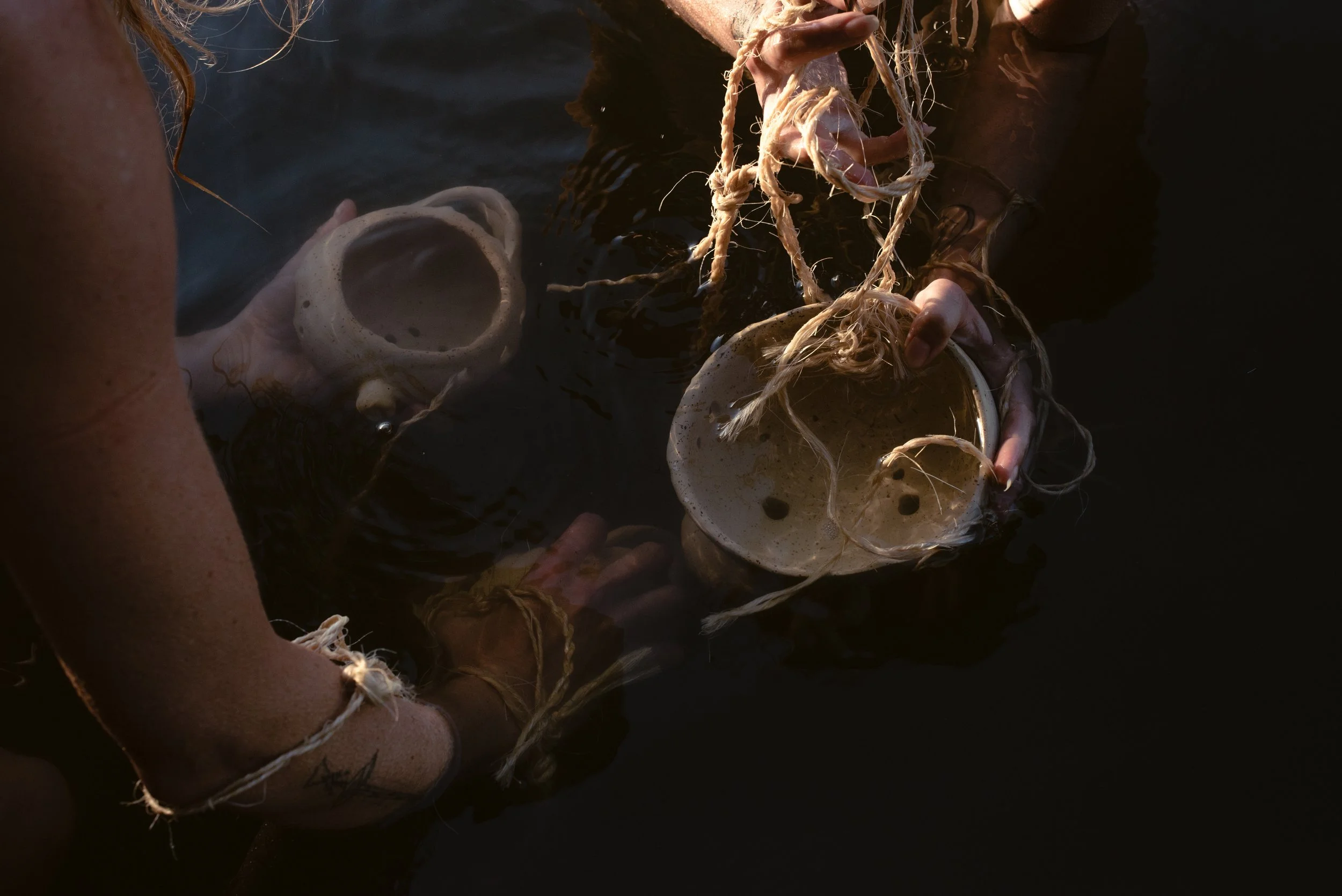
There is an obscure tradition: fill a vessel with water and your wish, wait for the water to evaporate, and the wish will be set free.
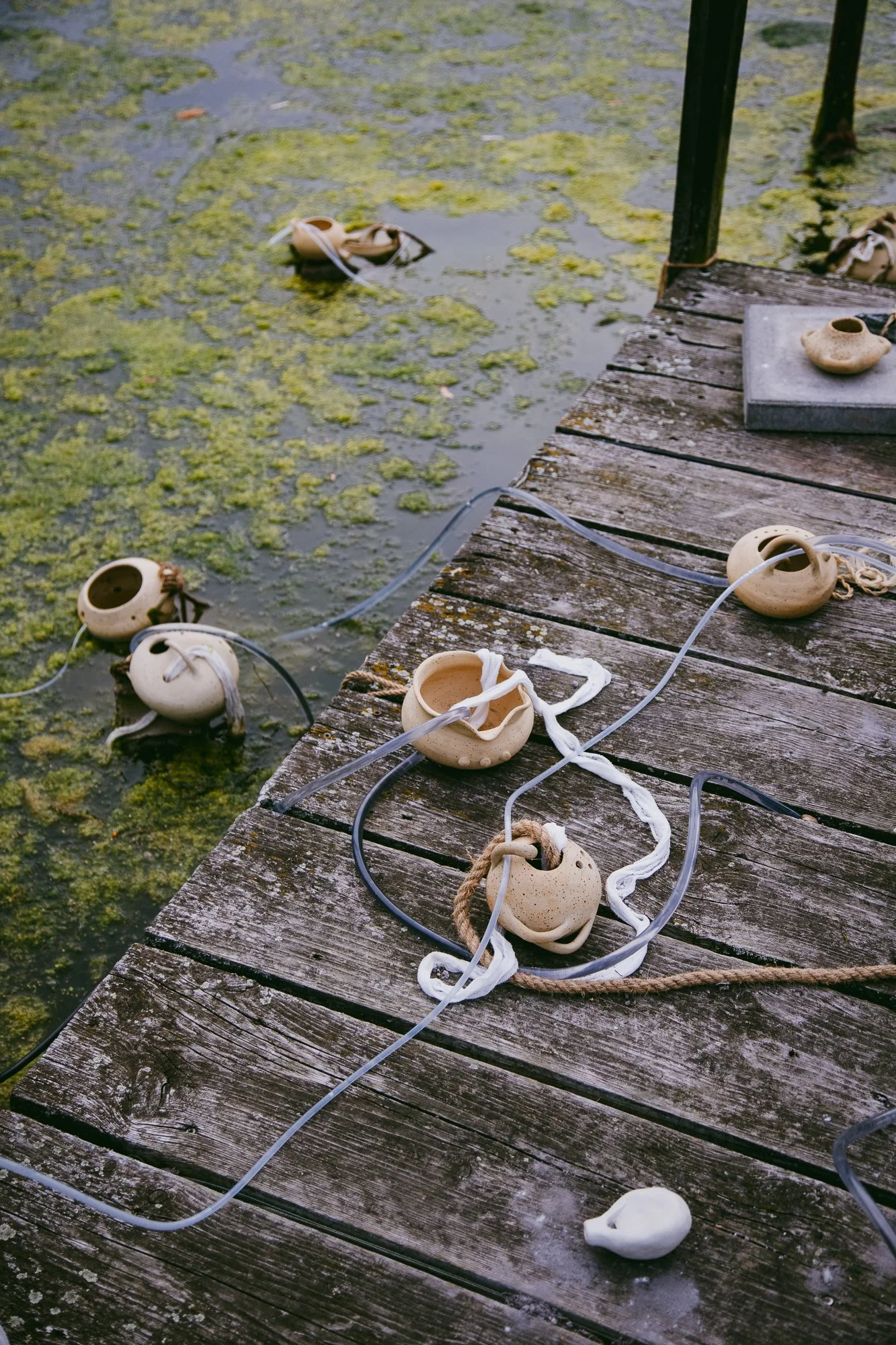
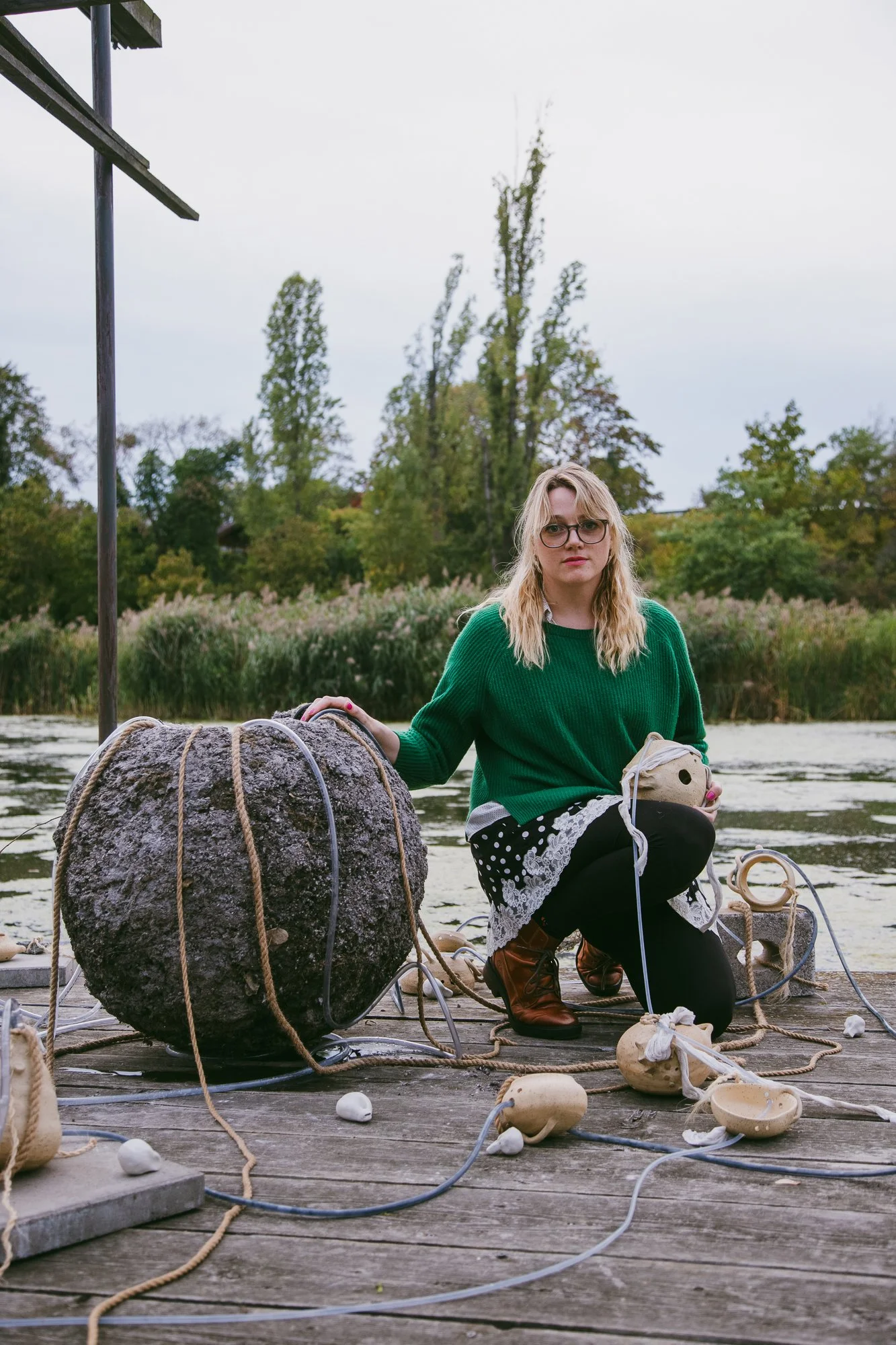
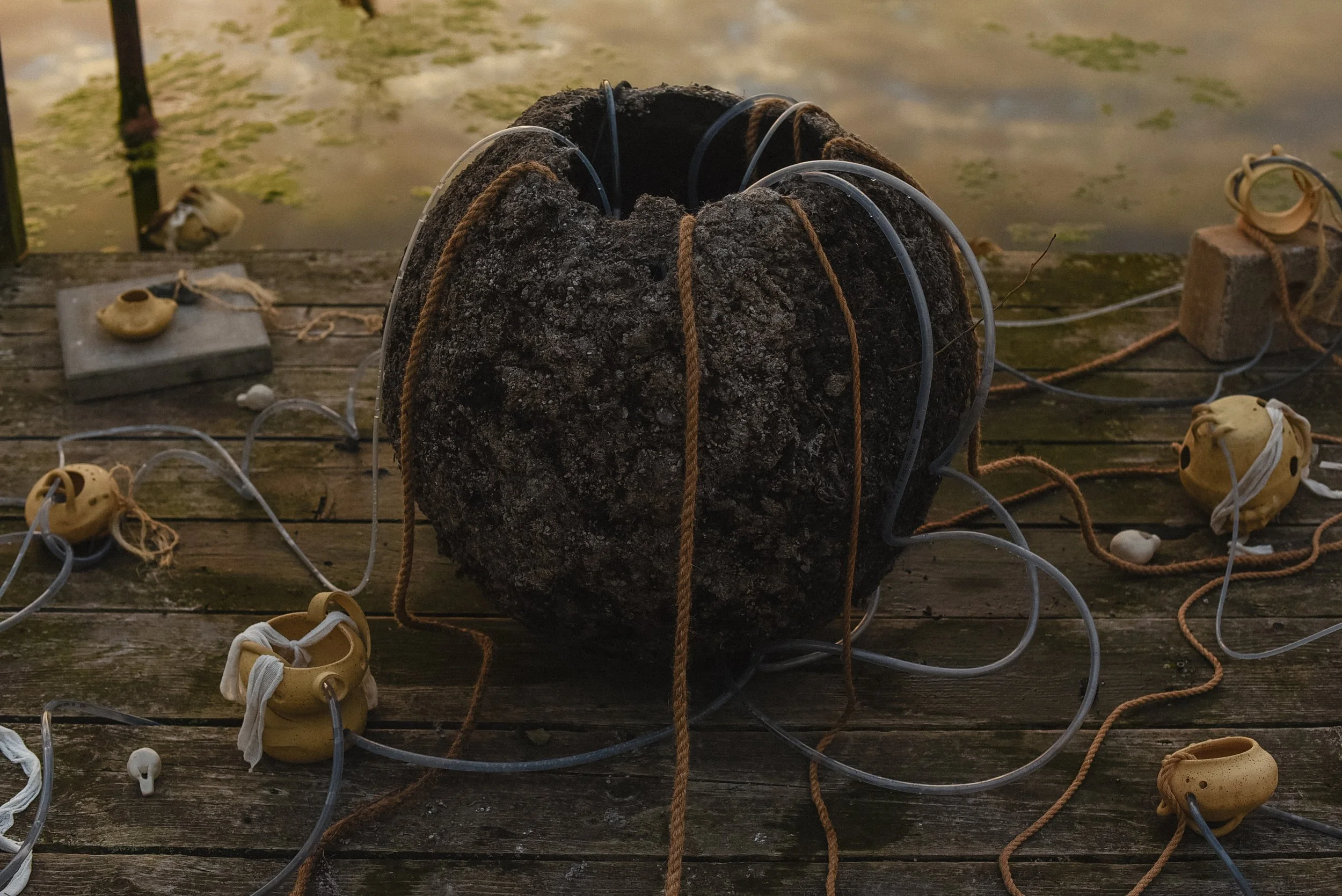
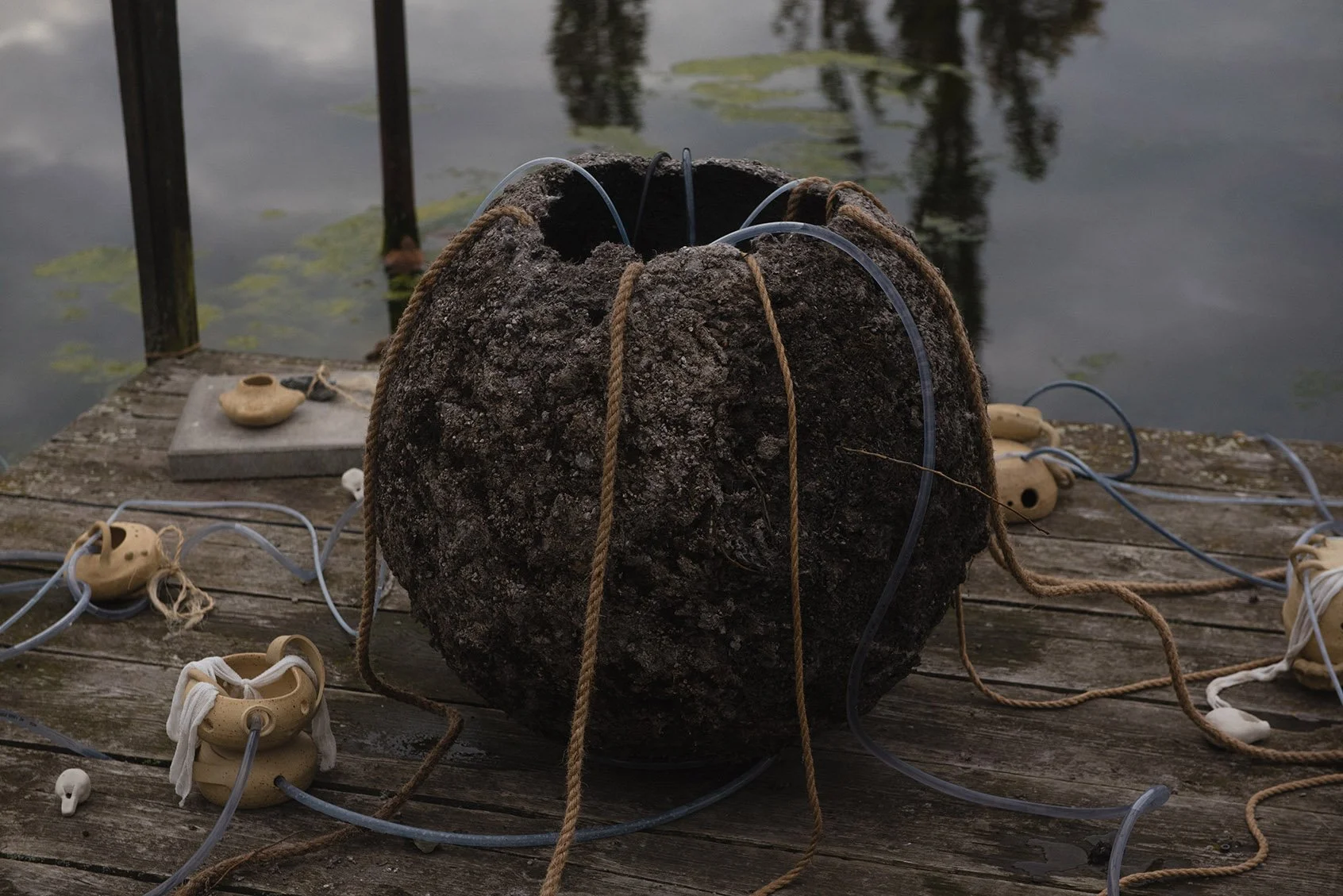
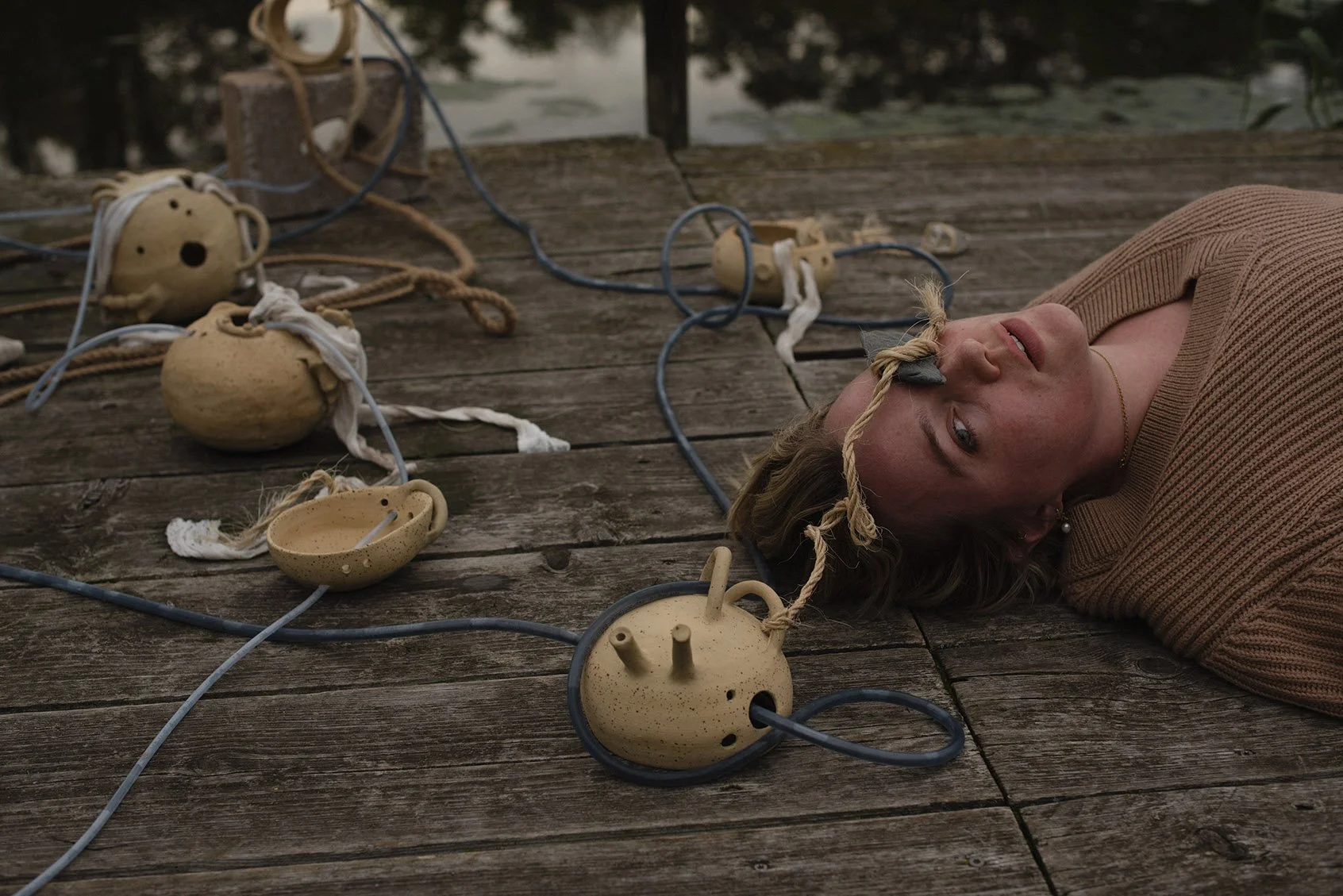
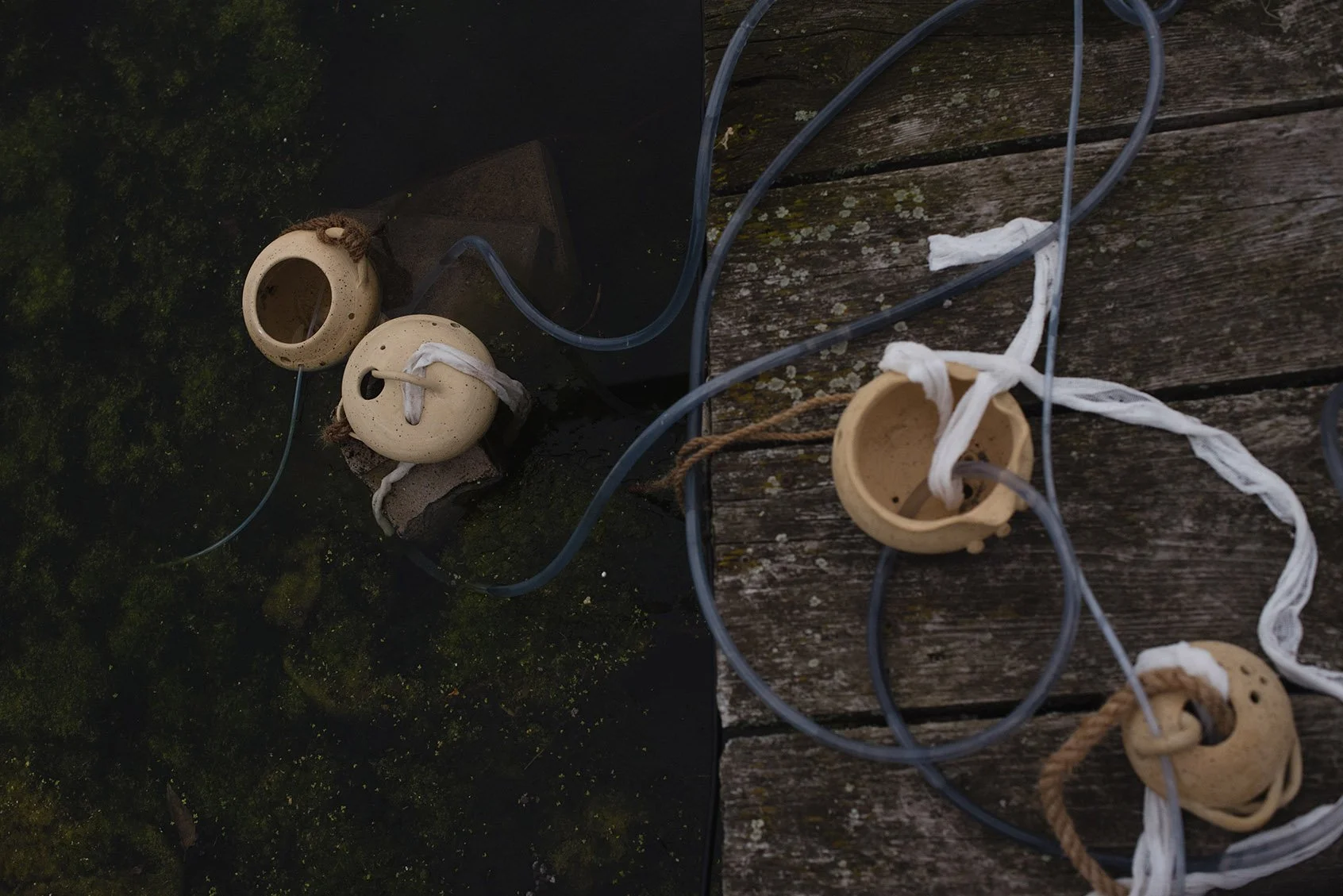
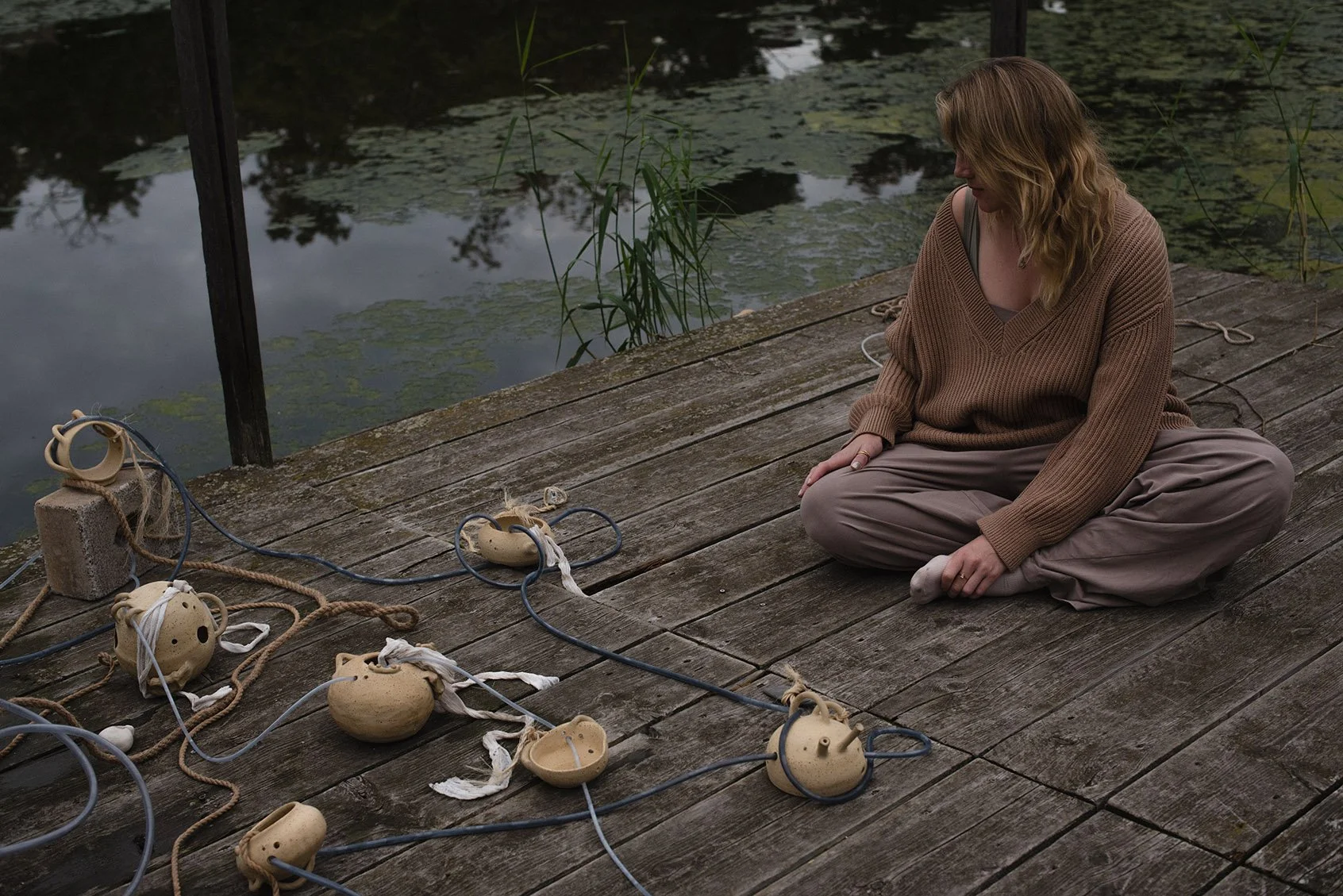
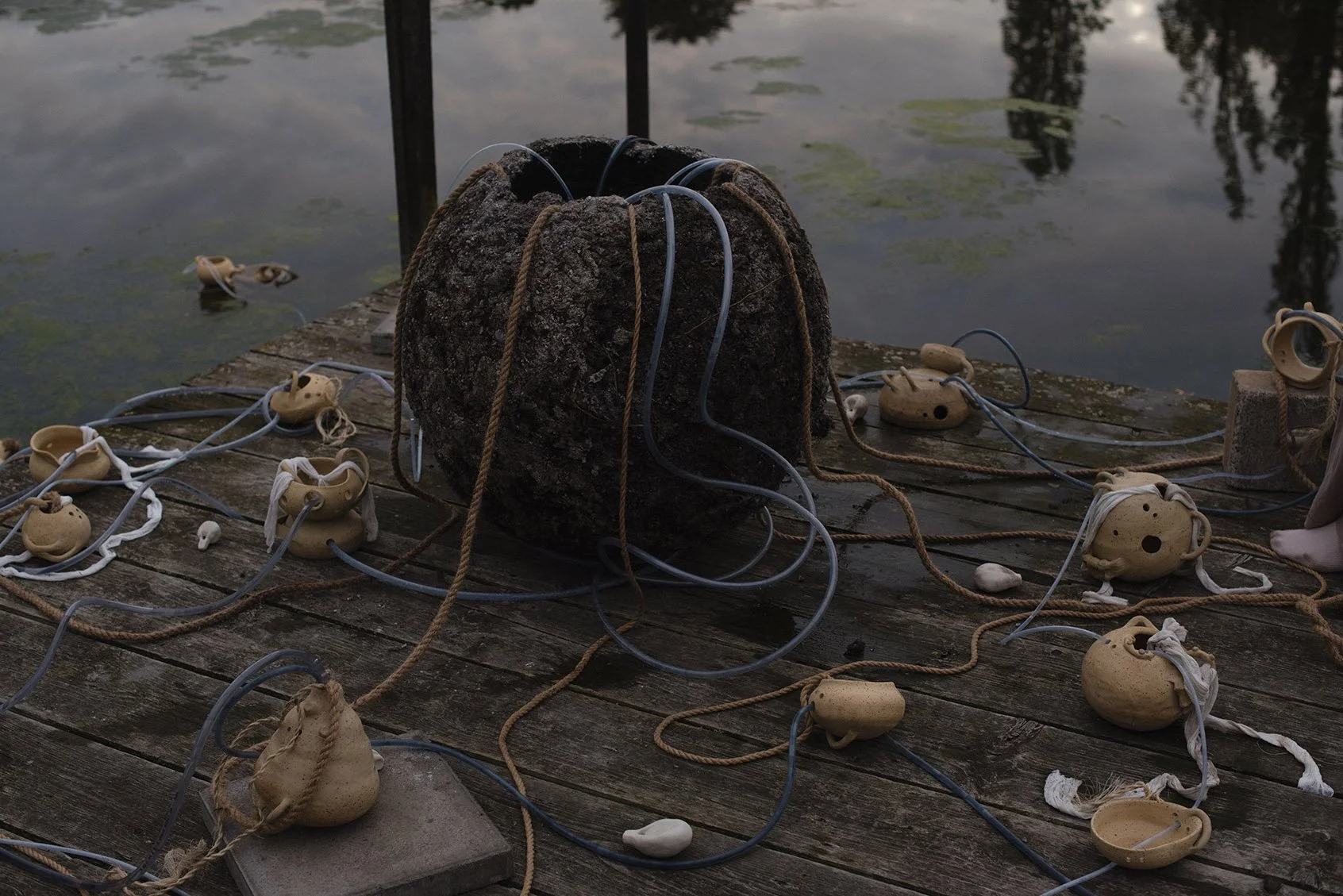
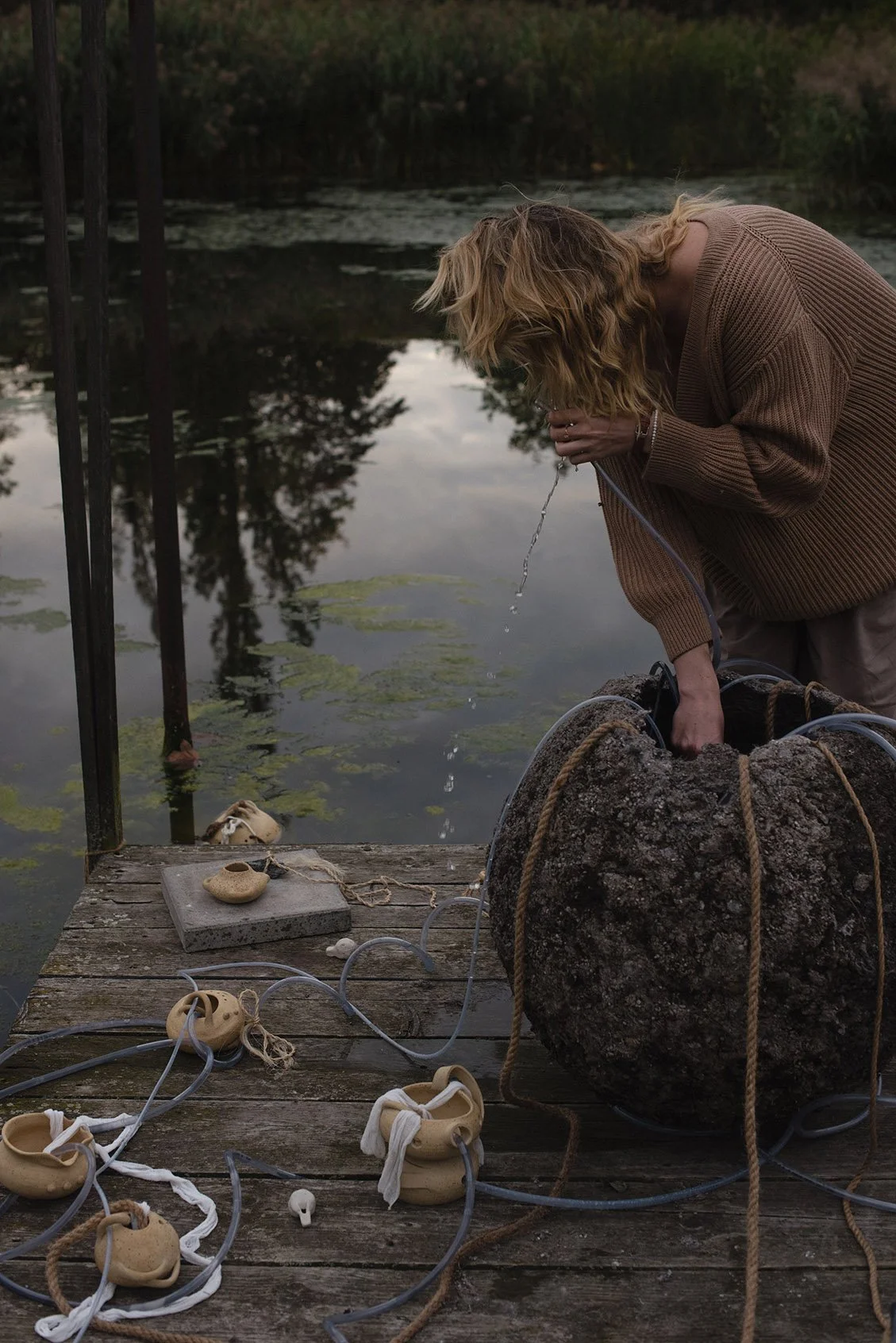
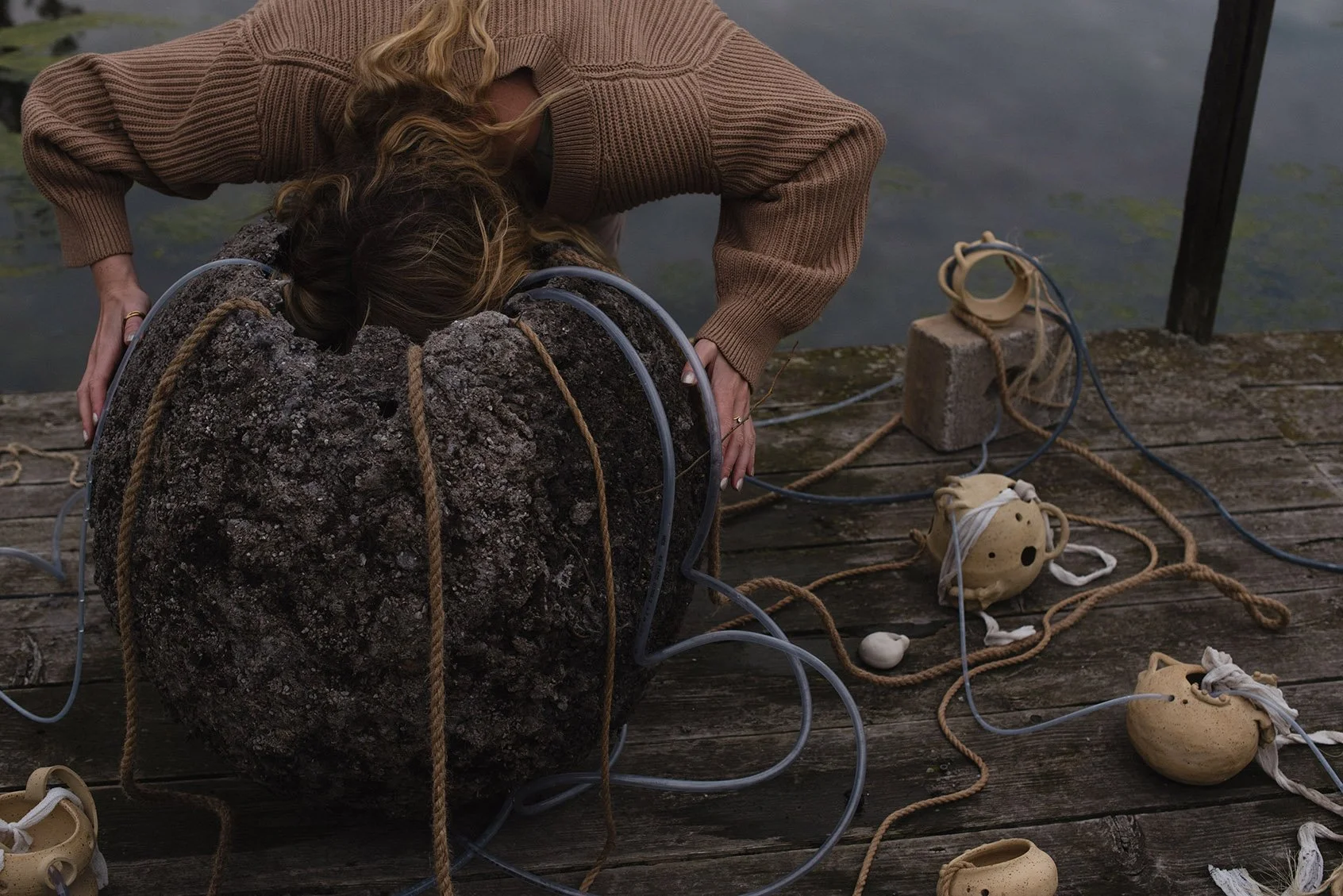
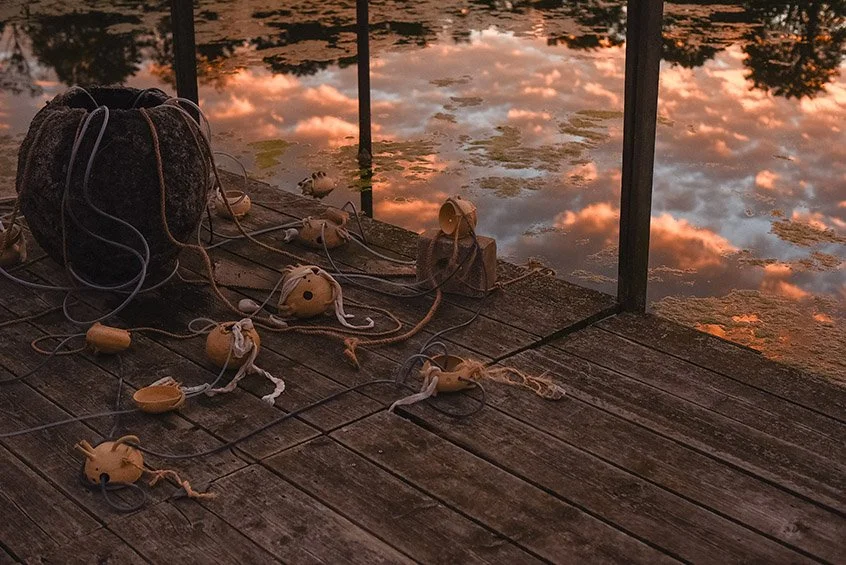
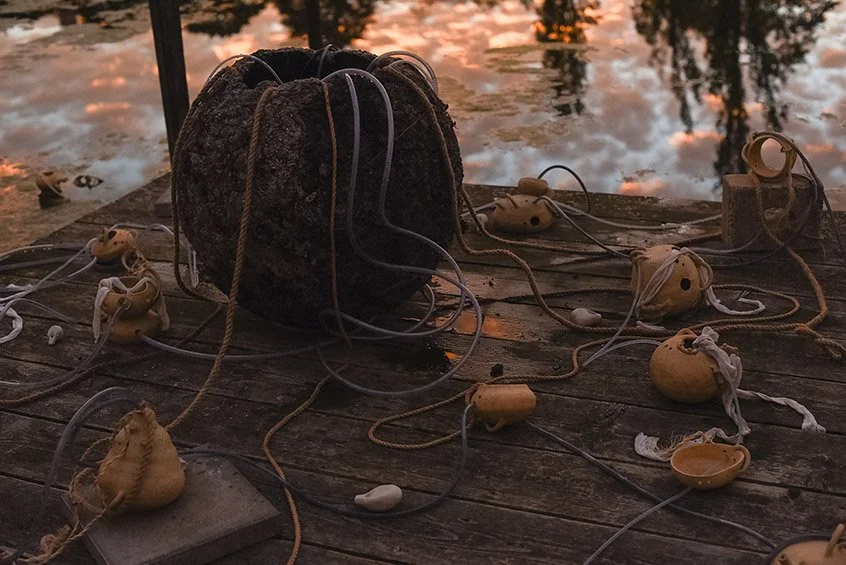
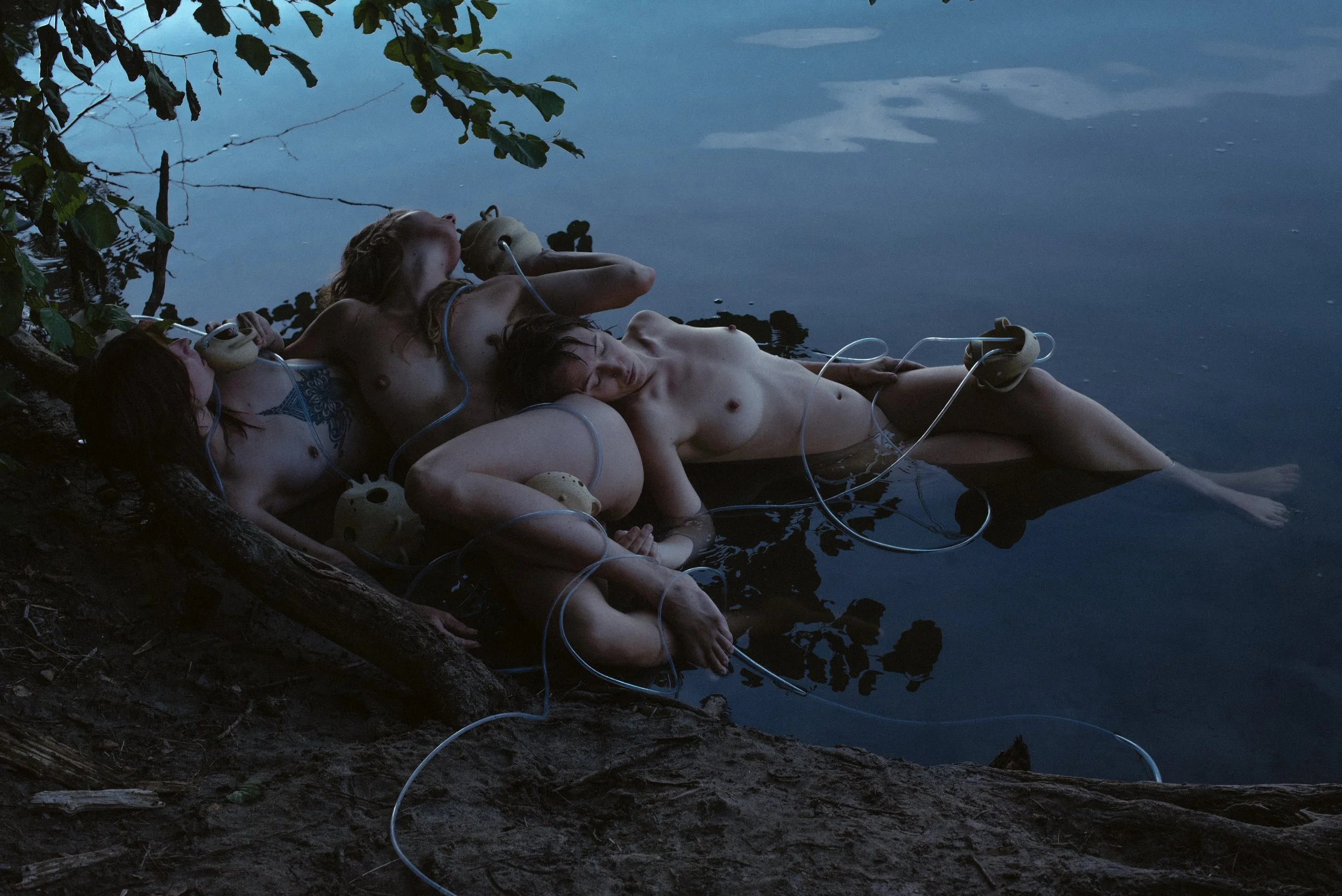
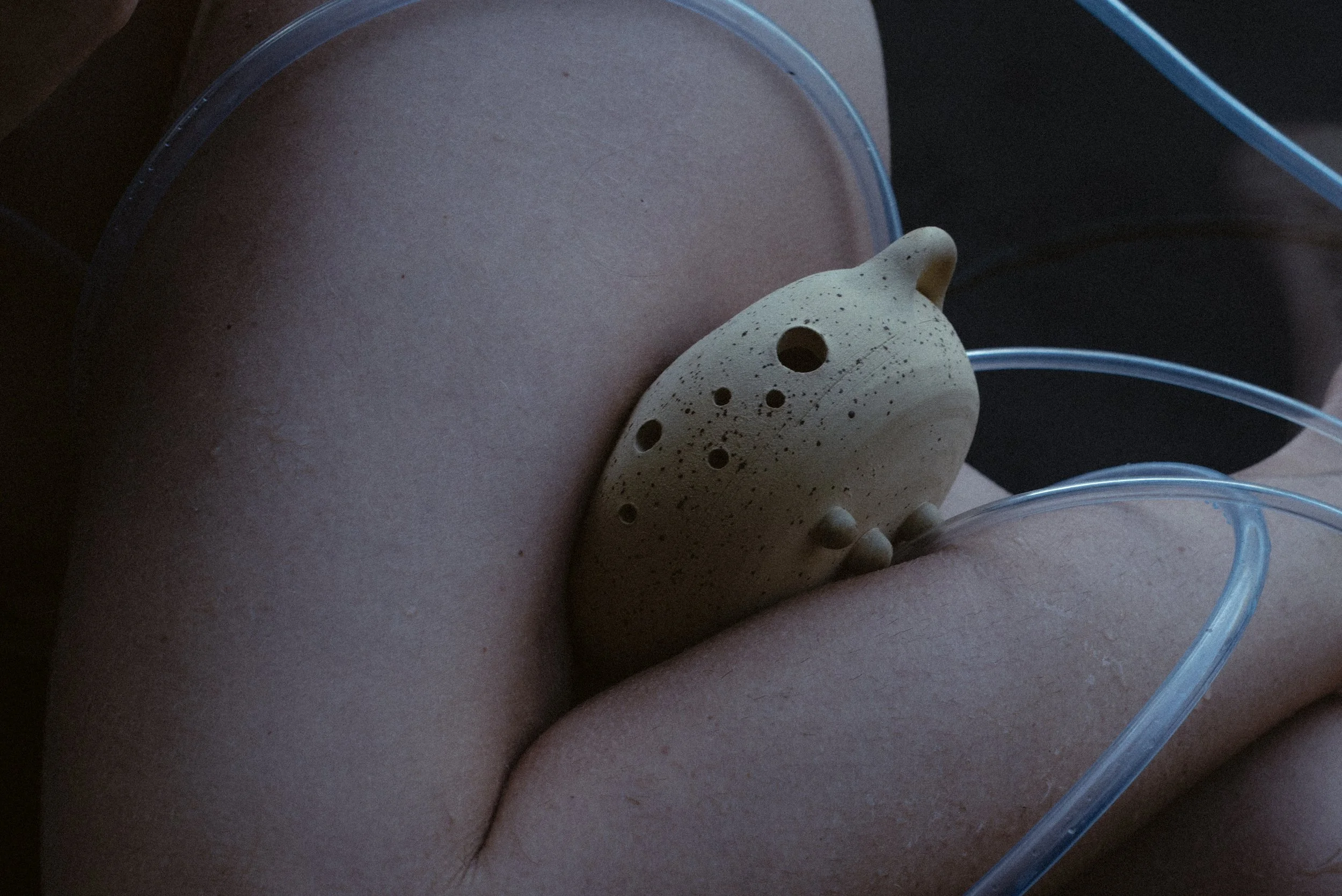
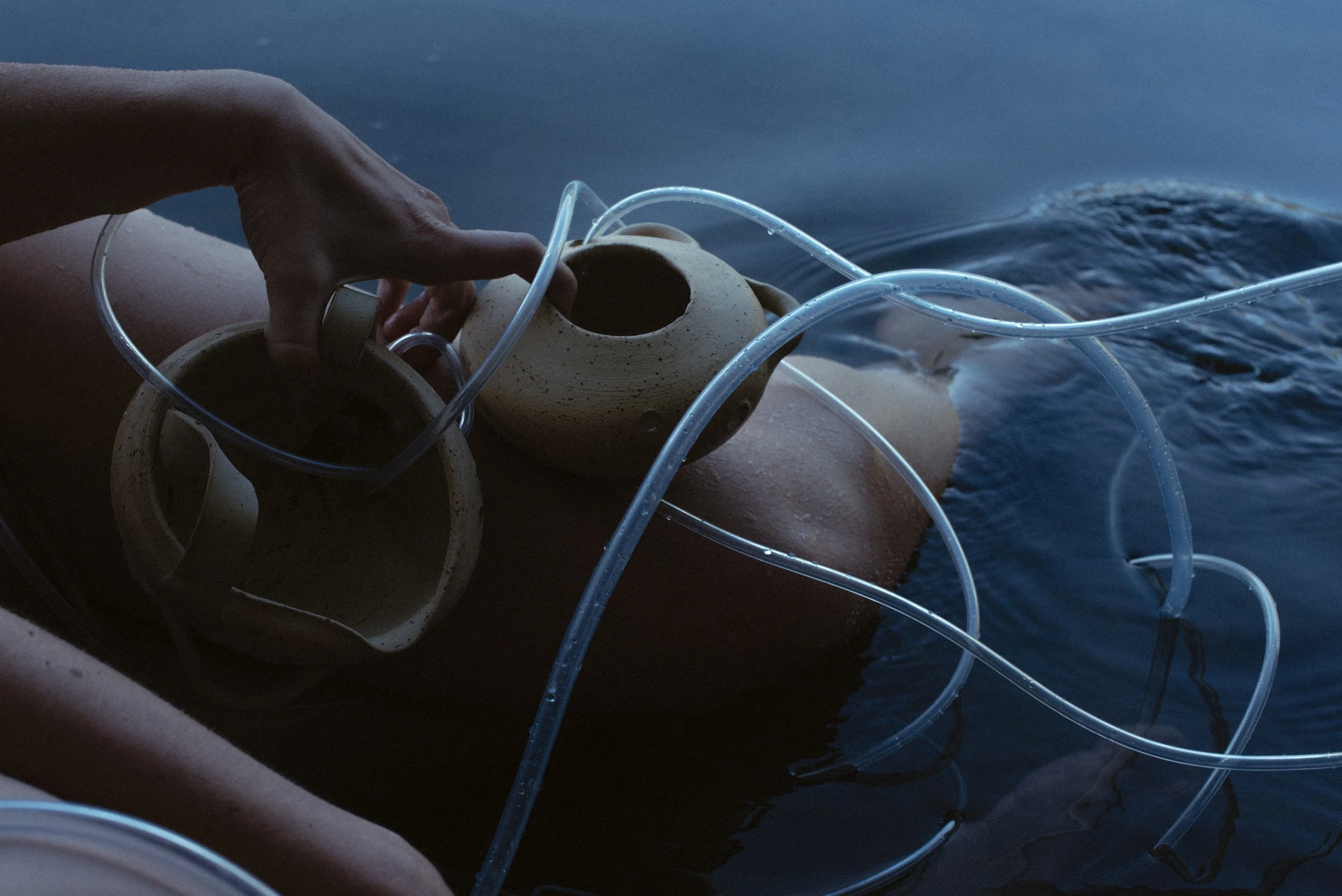
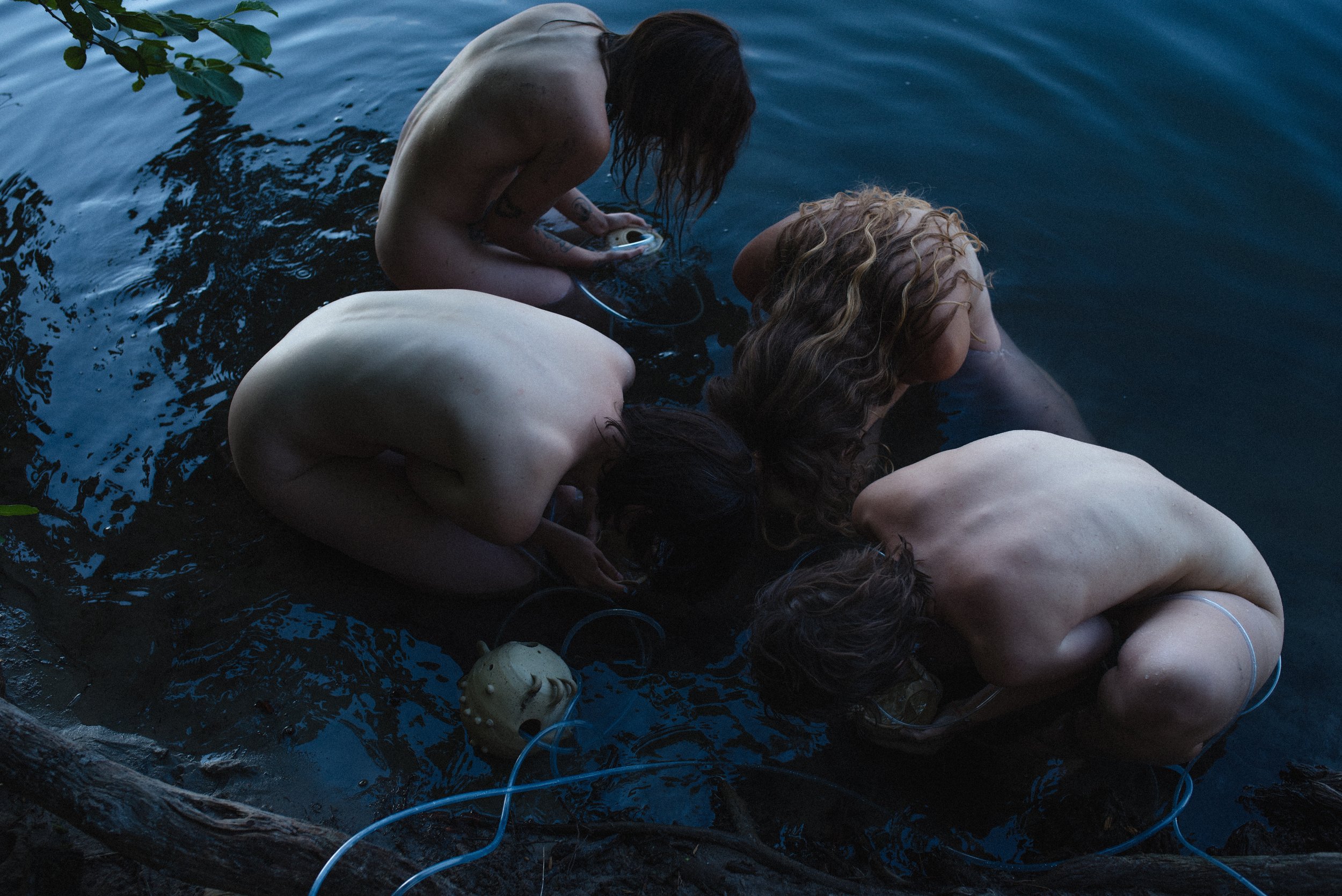
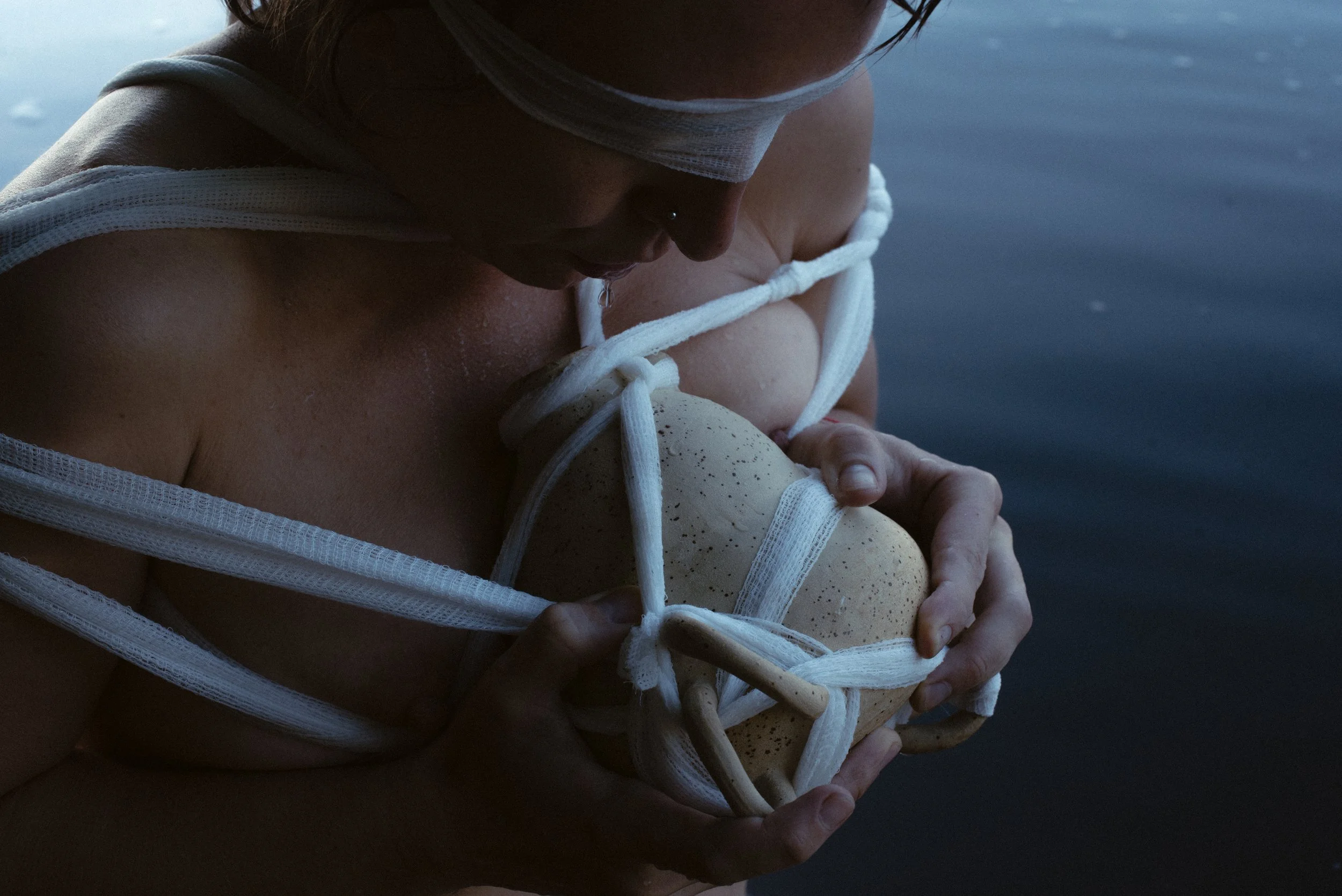
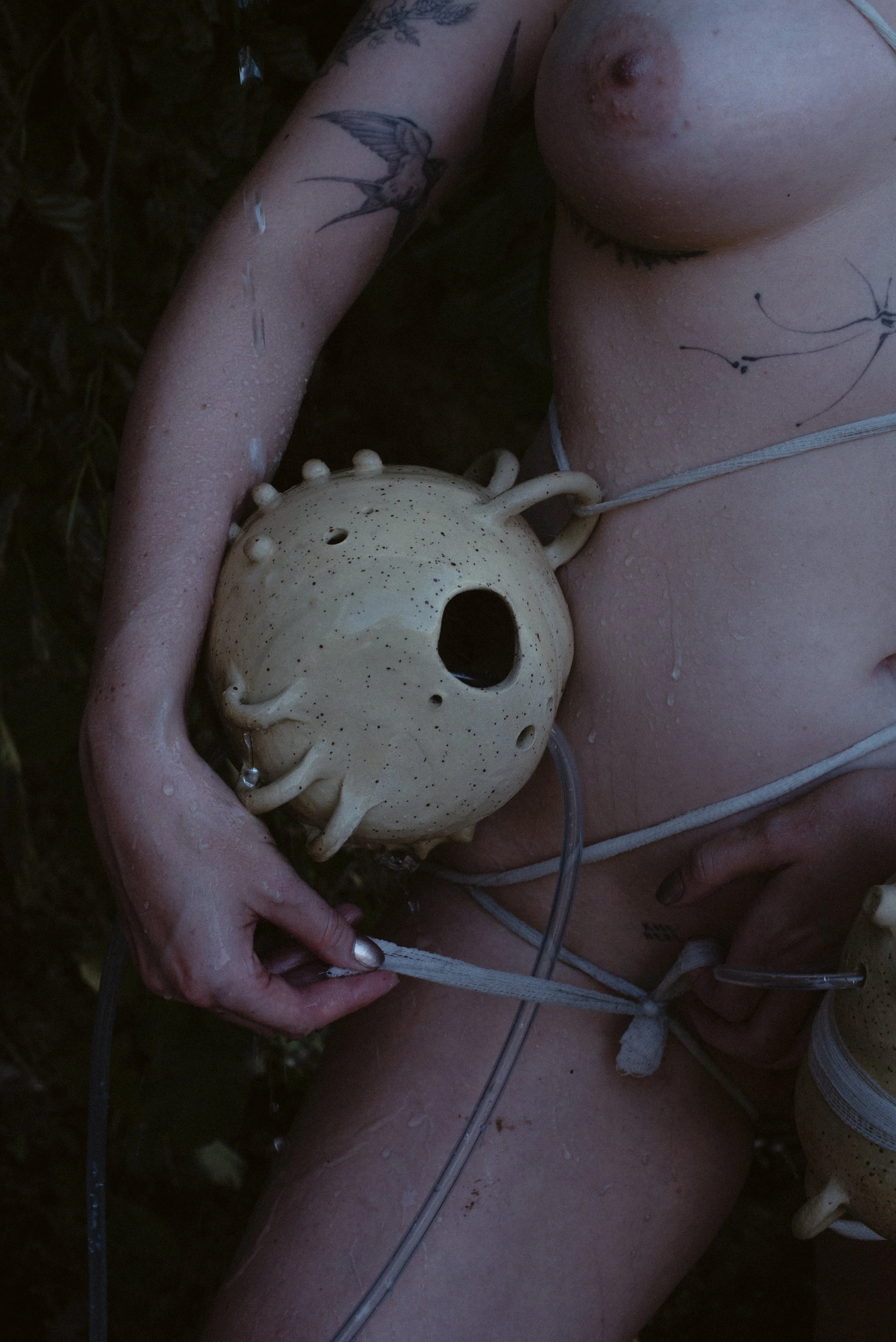
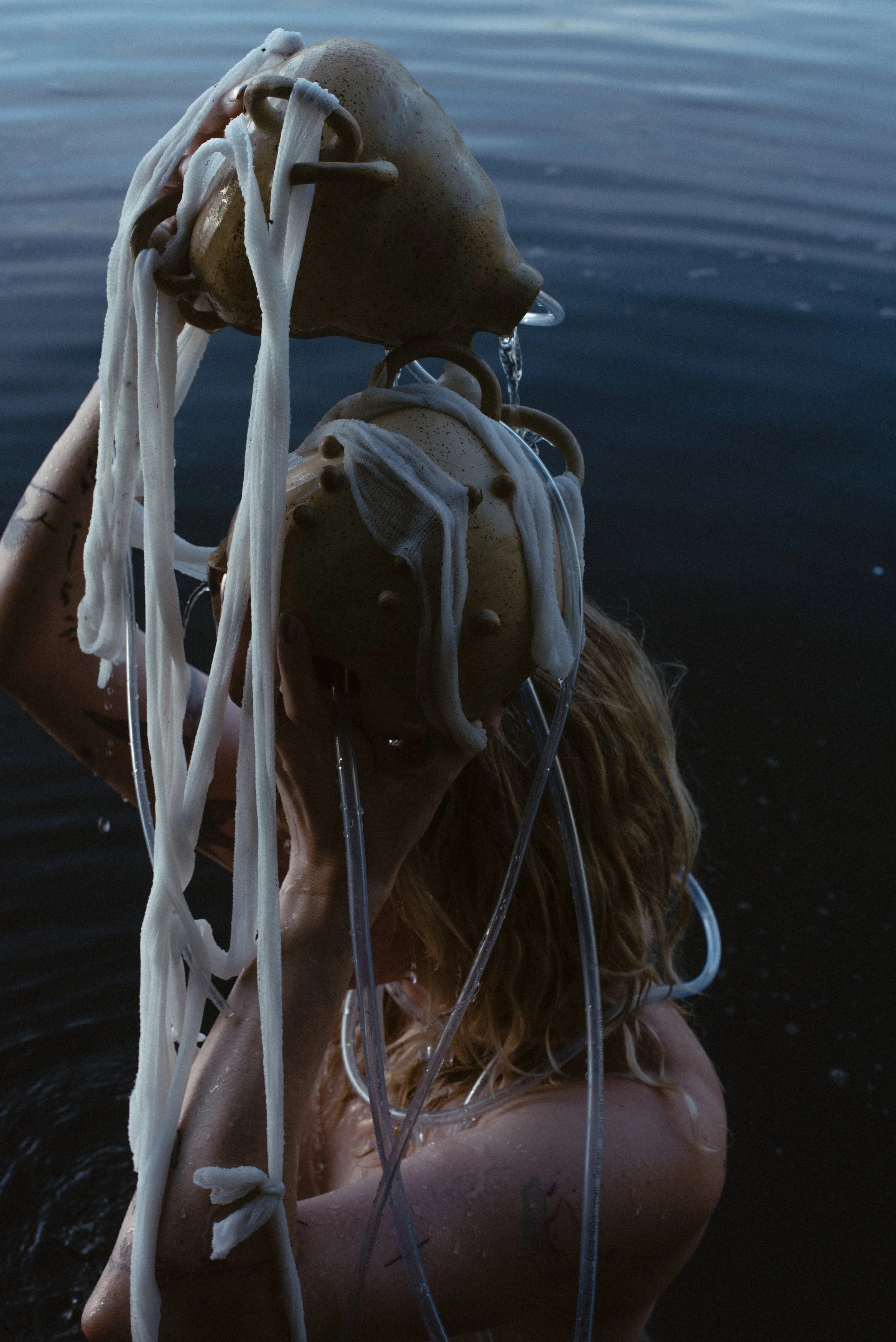
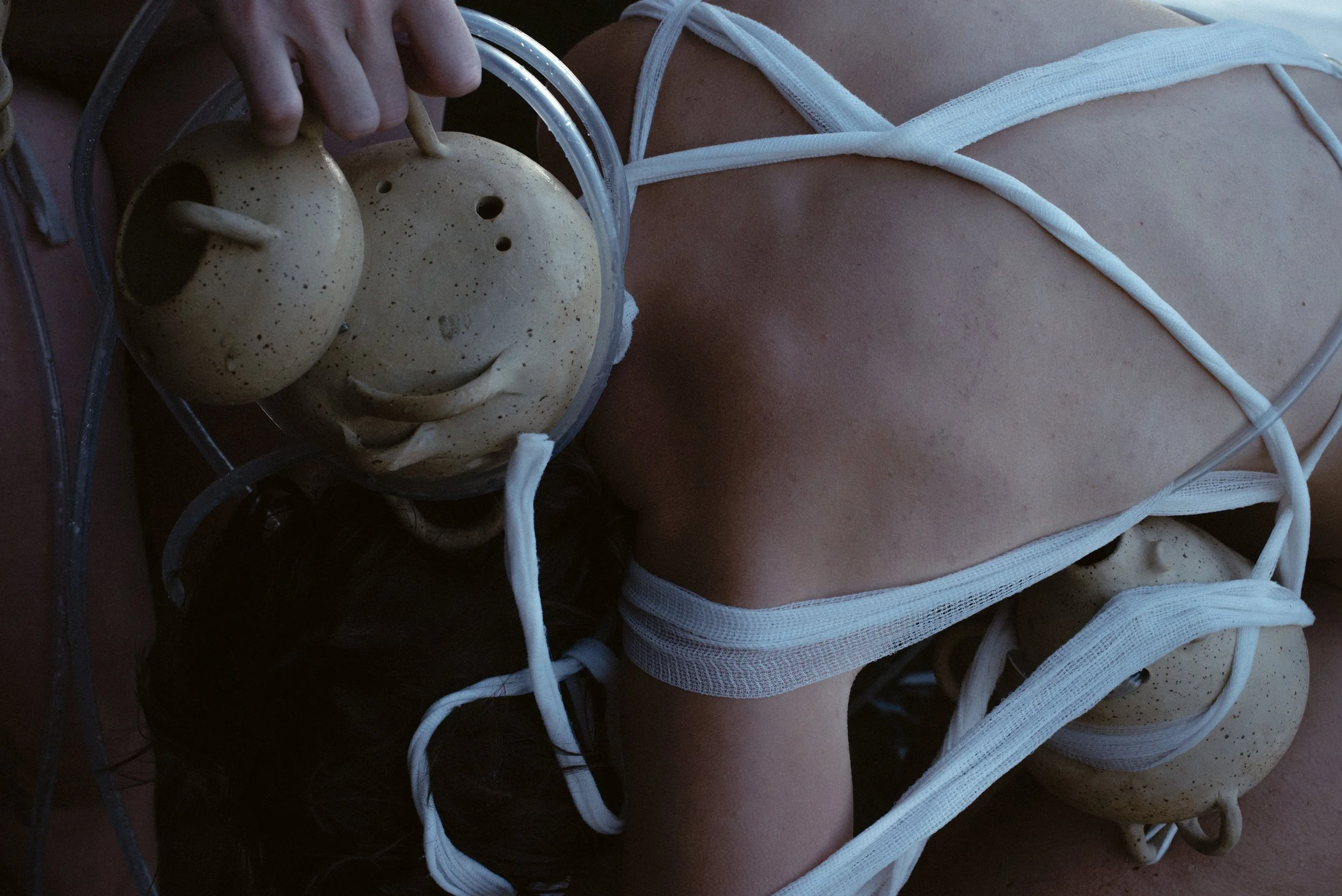
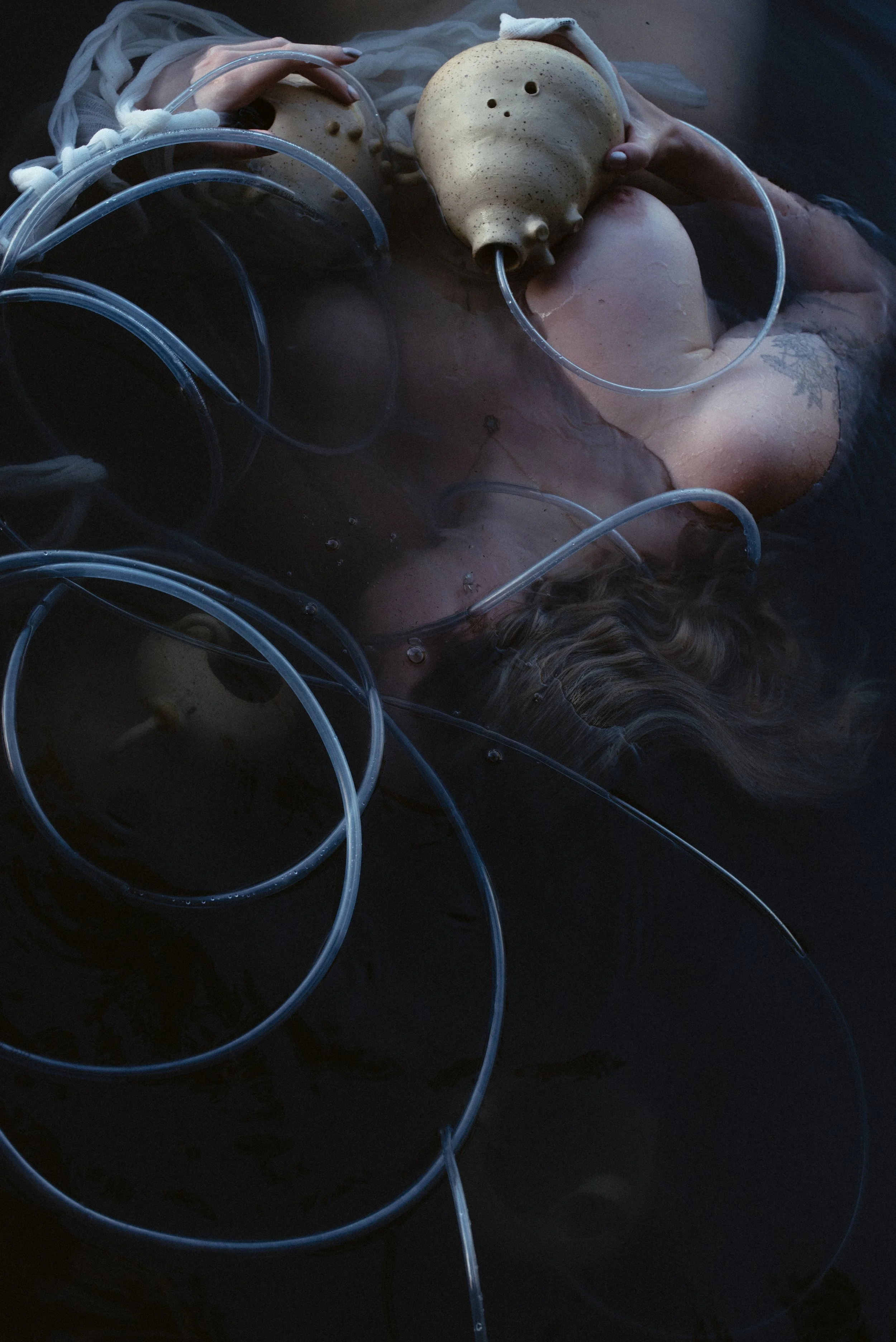
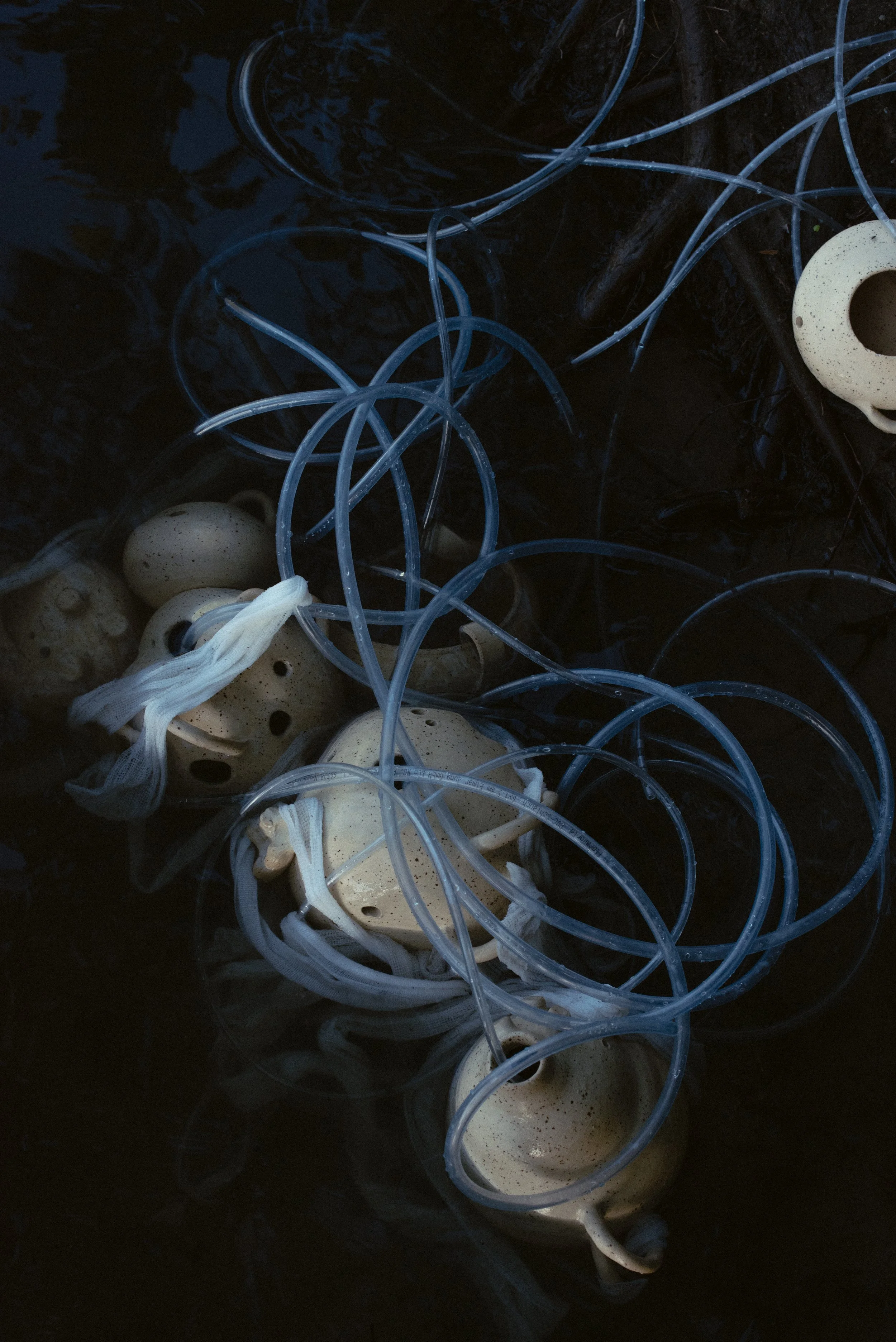
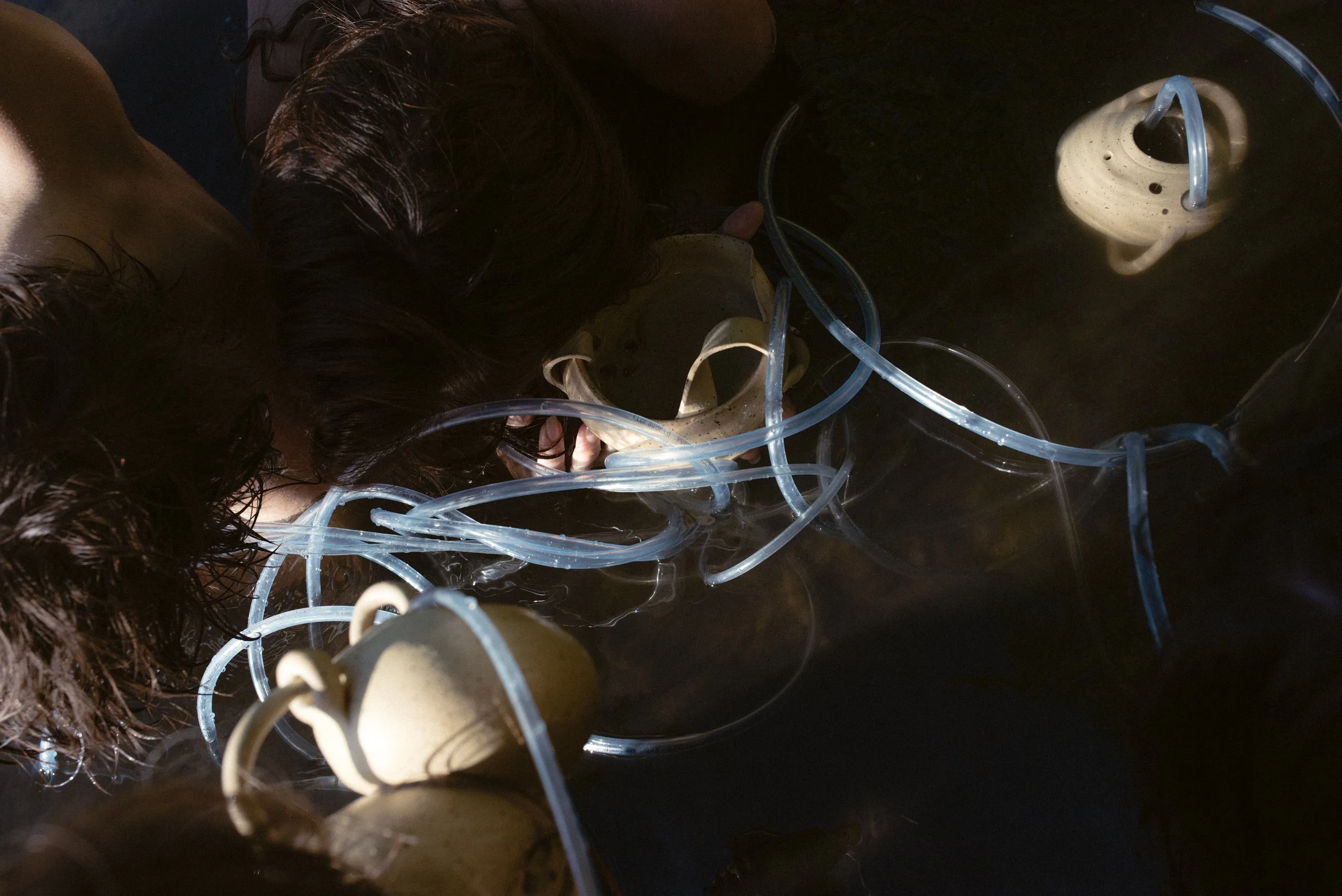
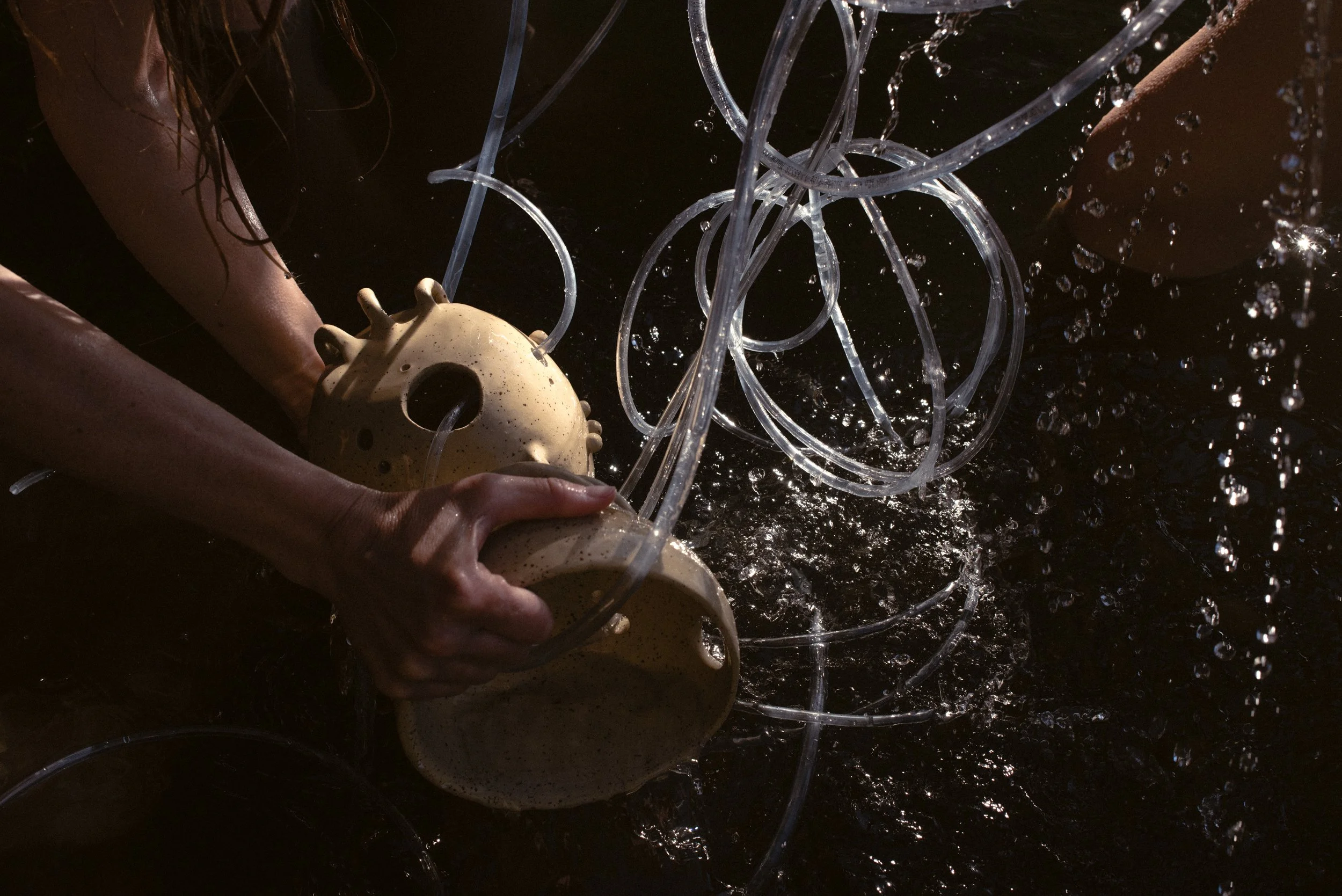
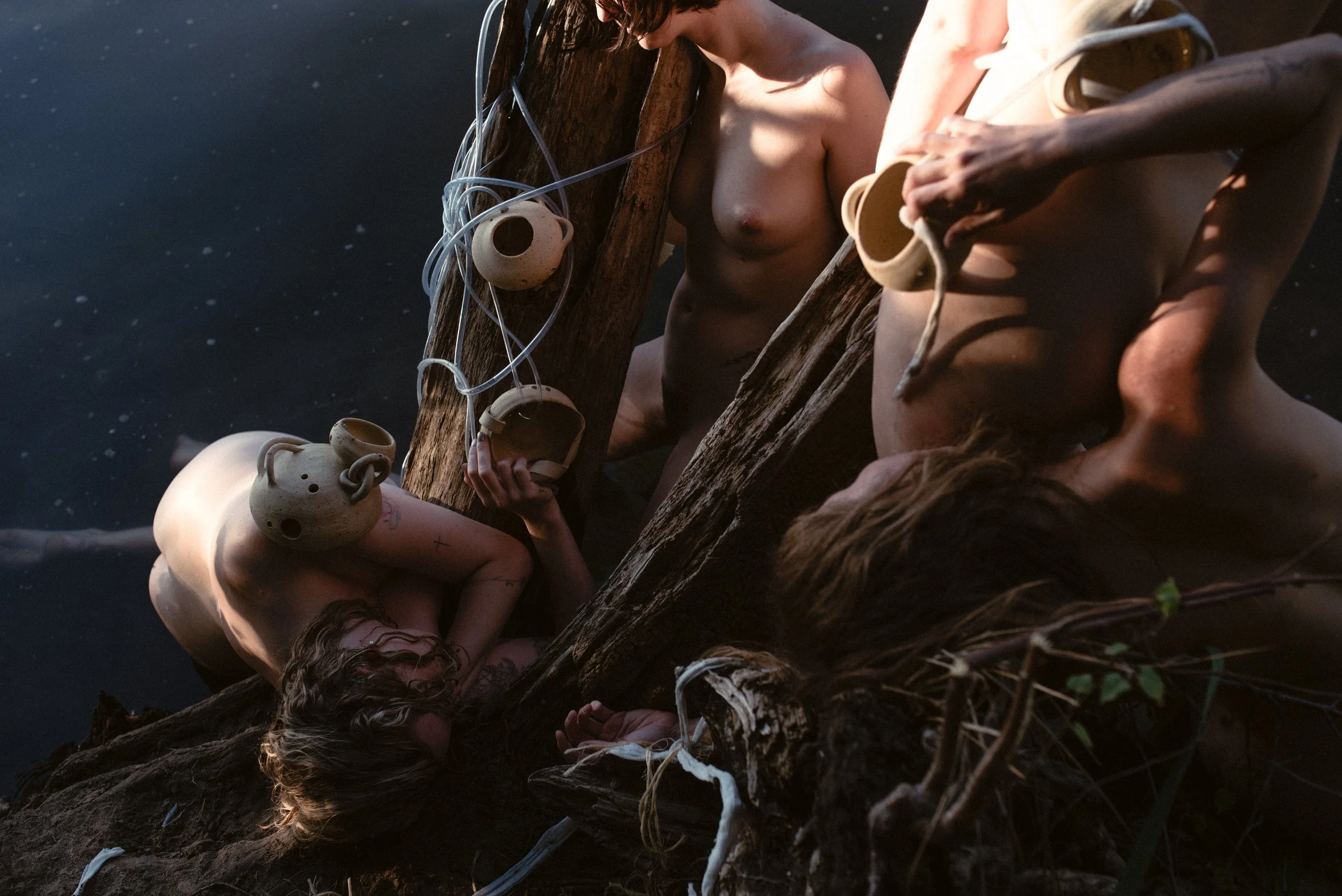
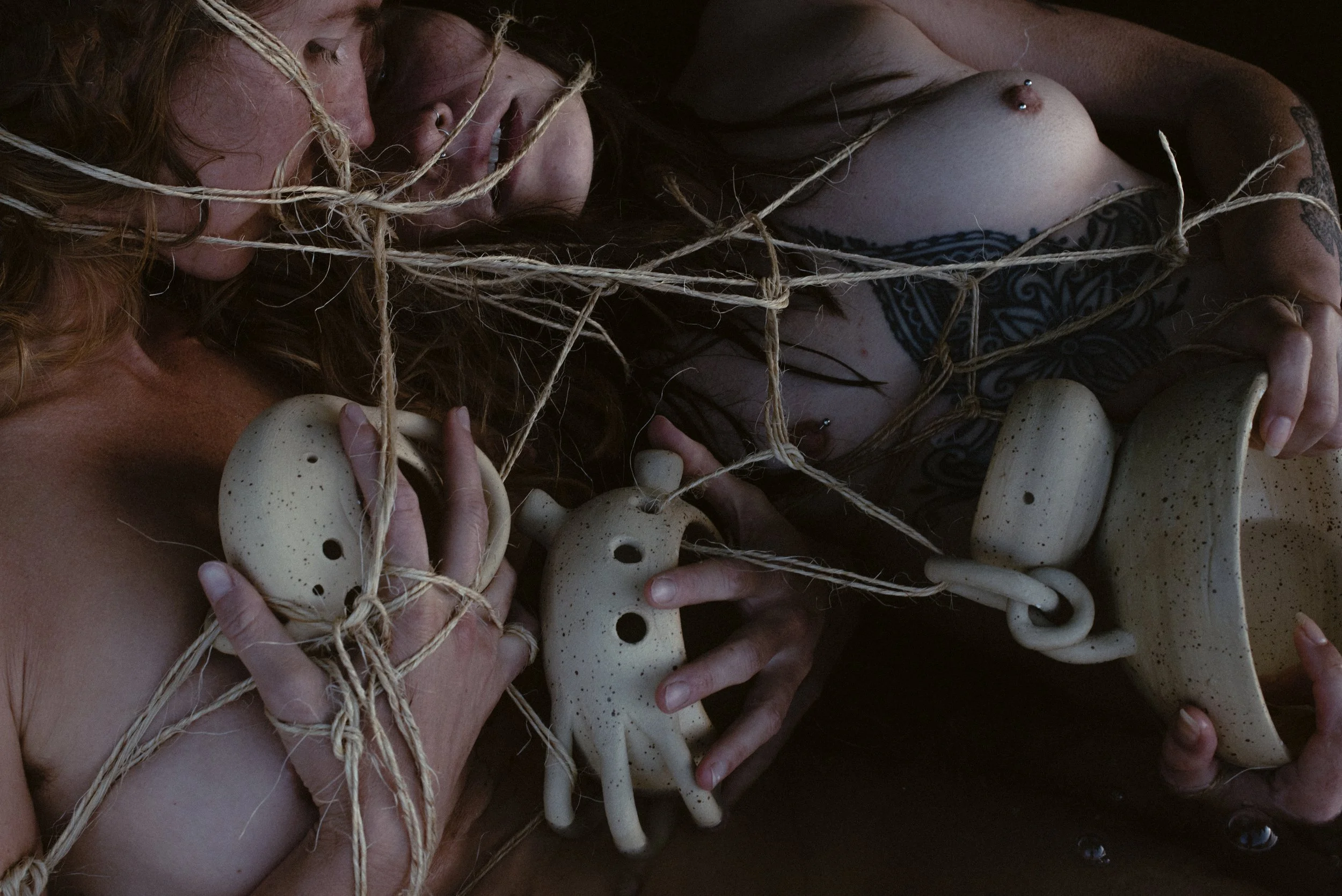
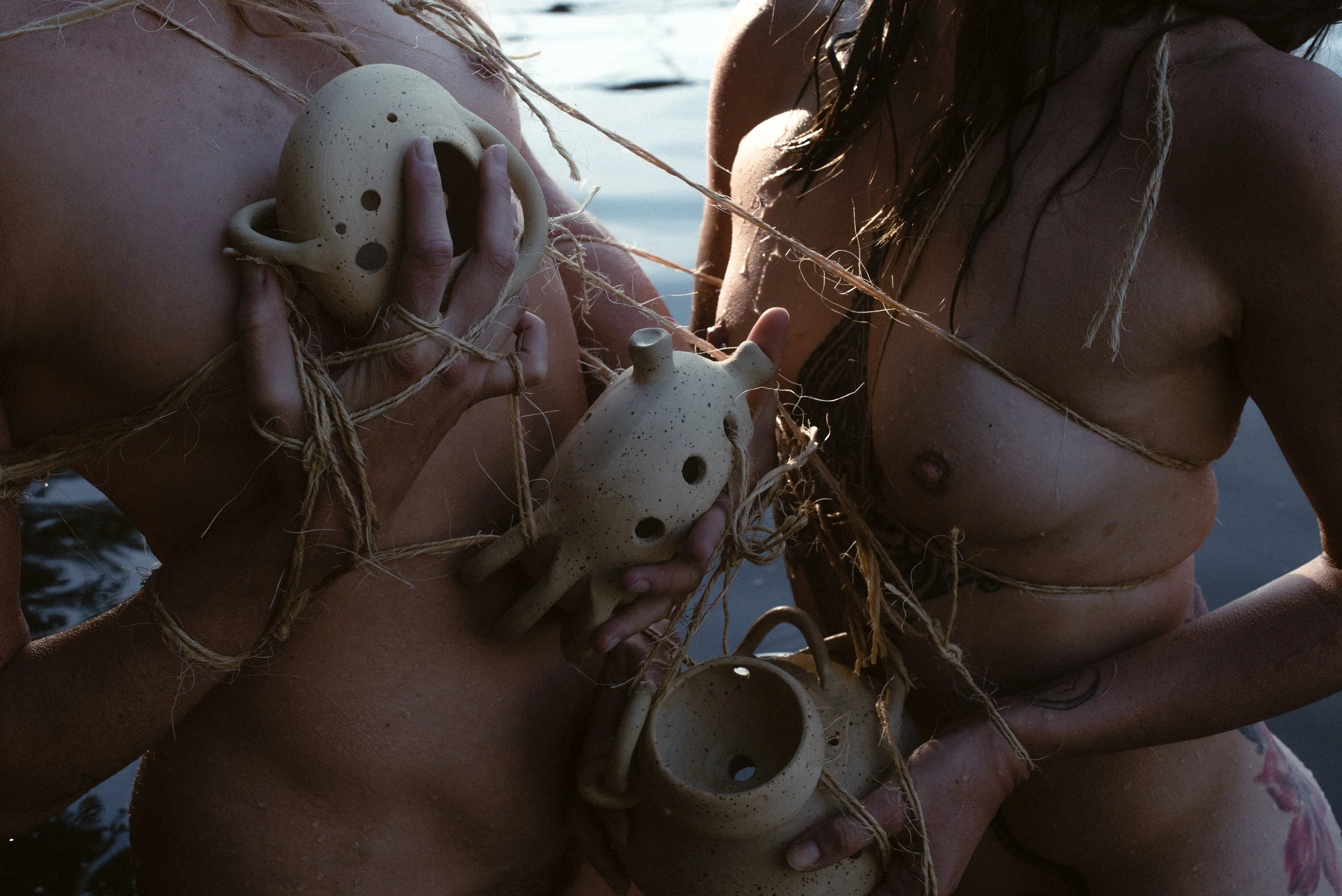
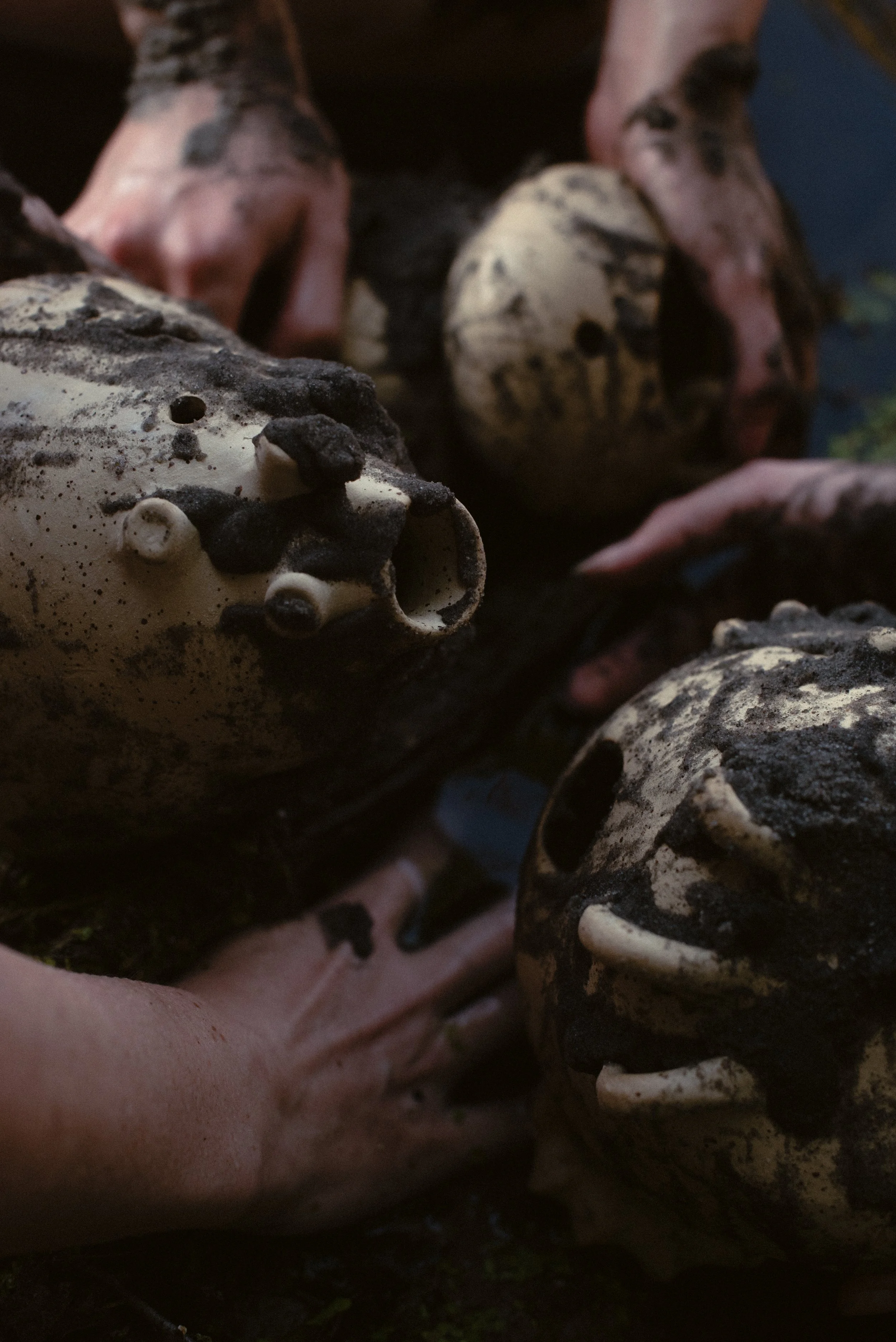
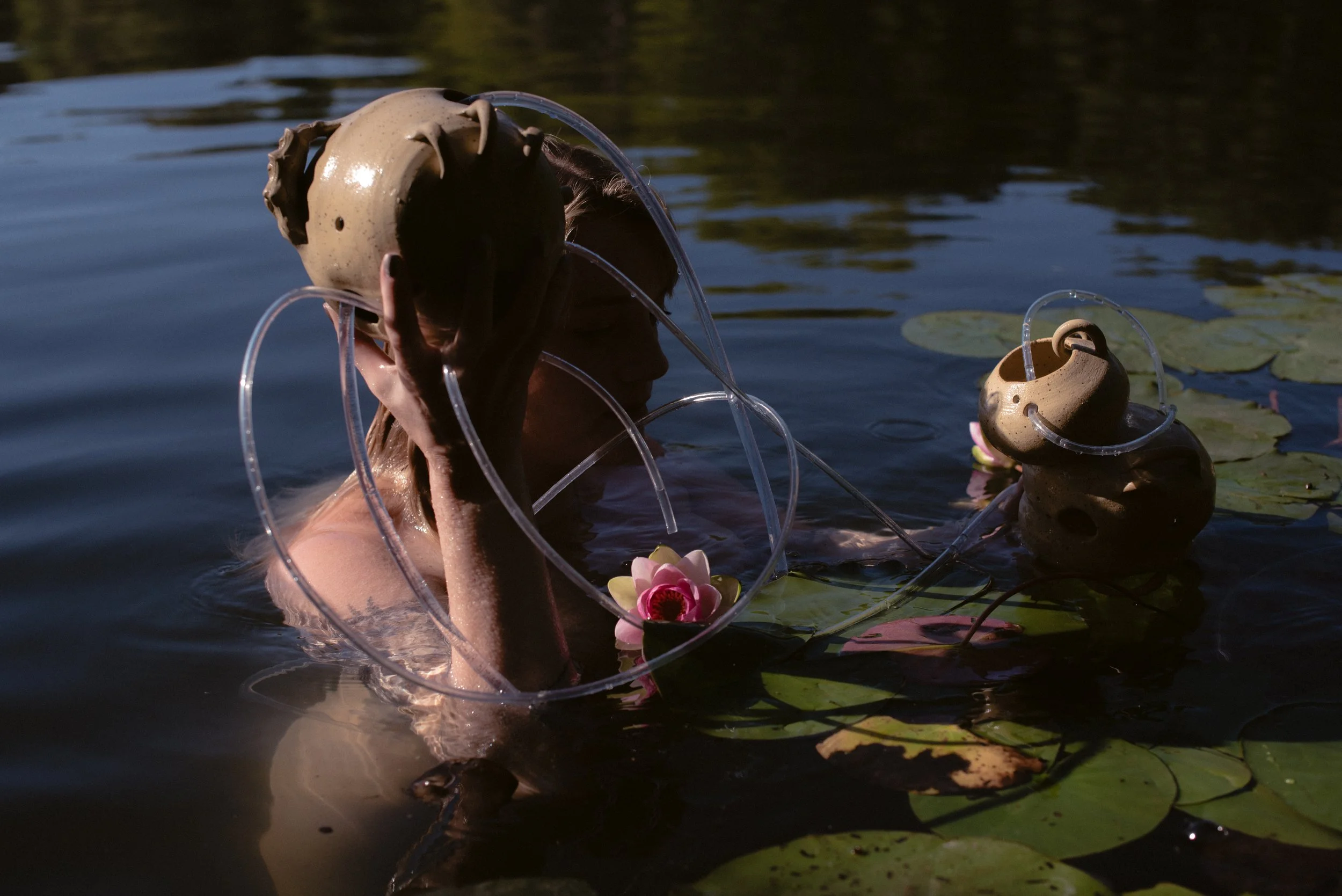
Apocatastasis Votum is a nest of ceramic and hypertufa vessels placed on the dock of the Floating University’s retention pond, a body of water that is a hybrid toxic industrial runoff and postapocalyptic protected urban habitat.
The vessels are malformed, unable to hold water. The wish has nowhere to be held.
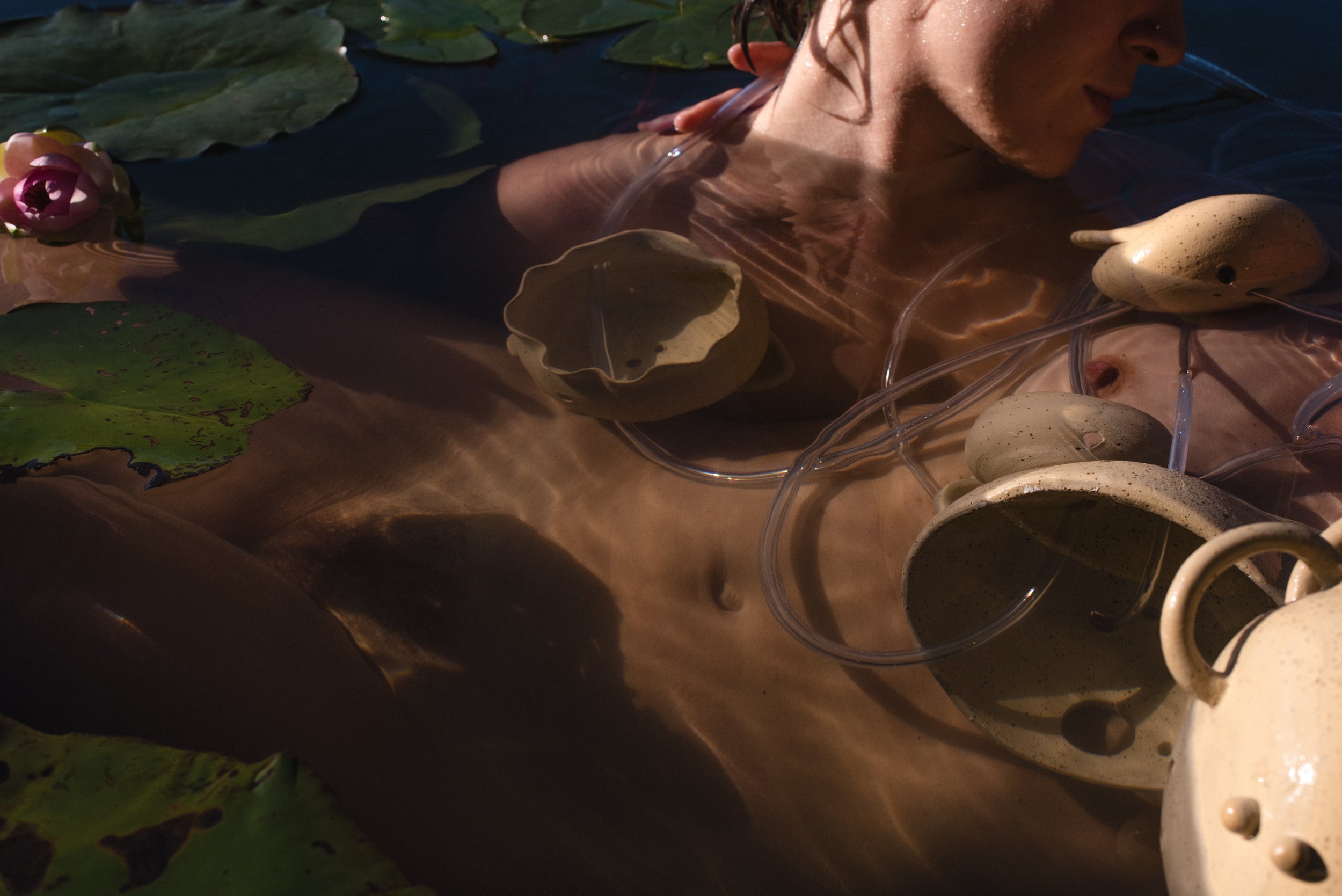
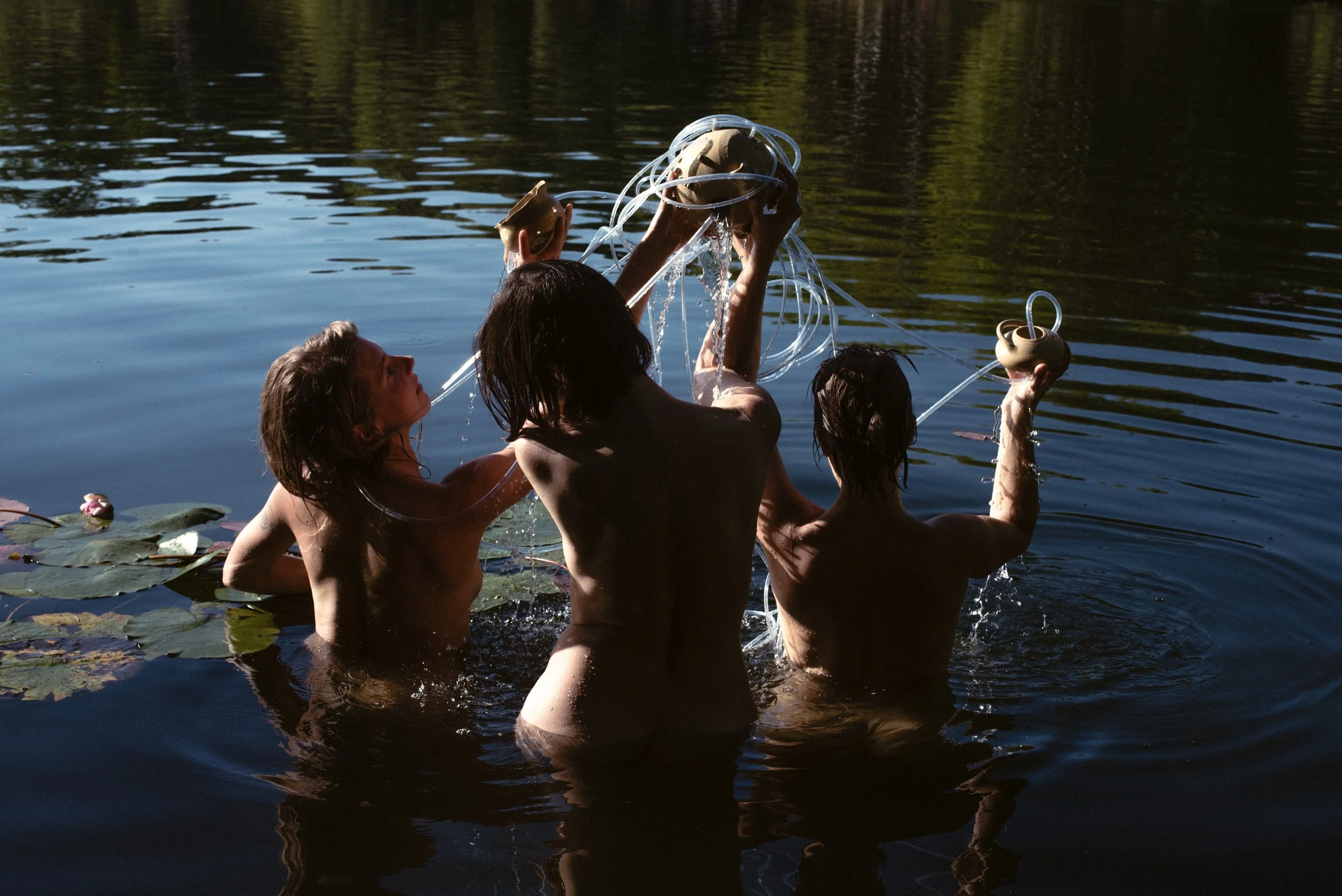
A central vessel feeds the others through a network of tubes: oxygen and charcoal. It moves without ever leaving the work and never settling inside it.
This is the nature of the post-dystopian wish: a hope that persists despite one knowing that it cannot come true.
Each vessel is a small resonant chamber. Whispers travel the hollow body walls and return slightly changed, as if they were never entirely yours. Every wish joins a chorus of the ones made before it. In this way, the chamber never fully empties.
Apocatastasis is the miracle: the heretical doctrine that everything will be restored, every wound healed, every corruption reversed. Clean water. The pond as it was before. The world as it was before. Votum is the offering placed at the shrine before the miracle. The vow paid to a god who has not yet arrived. Faith that the favour will come. Together, Apocatastasis Votum holds the wish in the condition of permanent almost.
You are invited to bring your wish to the water.
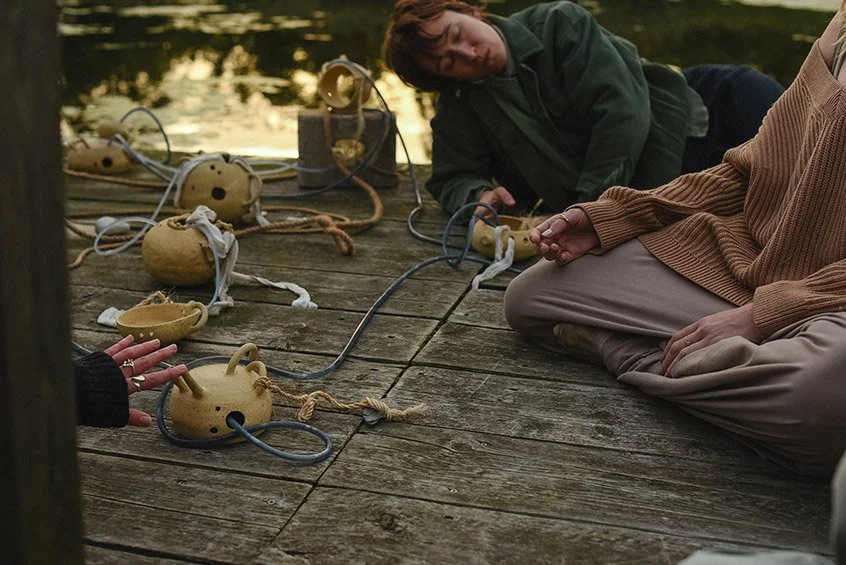
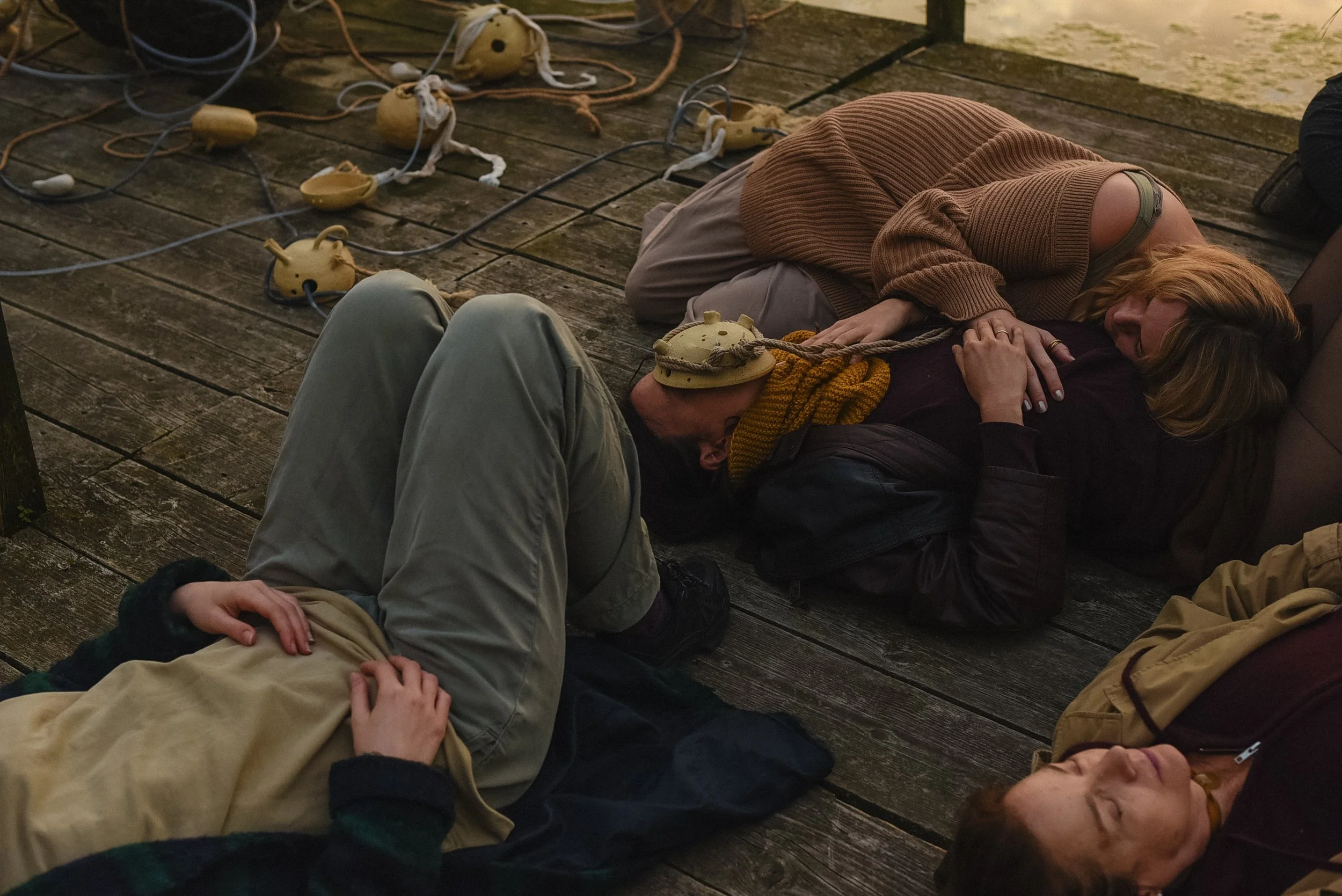
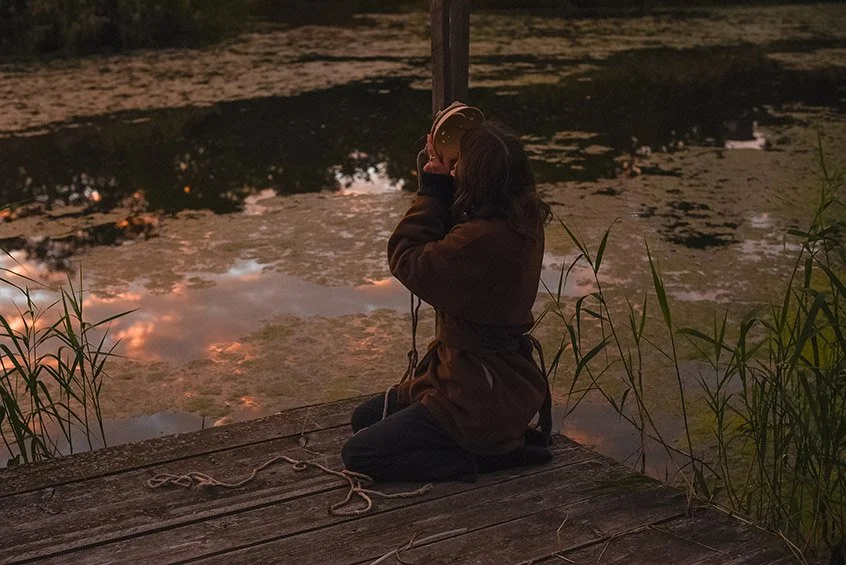
On 25 September, 18:00, the sculpture was activated by eleven voices. Each kept a small vessel through the full moon cycle, tending water and wish in the quiet. On the opening evening, we gathered in voice.
Grounded in feminist new materialism — Haraway's natureculture, Neimanis's hydrocommons, Morton's hyperobjects — and in Derrida's pharmakon, where the votive Gift and poison are one word, Apocatastasis Votum treats the poisoned pond and the wisher as continuous: water wishing about itself. It extends my ongoing practice of necromaterialism, an attention to matter as it dissolves and becomes otherwise.
fill. the small mouth. with sky-water.
one wish. laid down wet in the dark.
lay it down.
water gives.
water is the giving-over of shape,
the long slow yes to leaving,
it goes and goes and names the going home.
granted when gone.
say it again from the other side of the mouth:
the wish arrives the moment it departs.
holding and loosing share one throat.
so …. open.
open the hand. open the wanting.
let it thin to vapour, to the ground’s wide swallow,
to weather, to another land’s rain,
to a stranger’s tuesday morning tea.
this is giving.
this is giving over.
wish through surrender:
carry the whole ache in two hands
and turn the two hands
out.
water already knows.
it asks the air where it goes and trusts the silence.
it fell. it rose. it dreamed itself to cloud
and returned as someone else’s tear.
be that ungoverned.
want it all.
release it all.
let the vessel
empty
you
into the world.
(surrender)
© Jaqueline Louan
© Jaqueline Louan
© Jaqueline Louan
© Jaqueline Louan
© Jaqueline Louan
© Jaqueline Louan
© Jaqueline Louan
© Jaqueline Louan
© Jaqueline Louan
© Jaqueline Louan
© Jaqueline Louan
© Jaqueline Louan
© Jaqueline Louan
© Jaqueline Louan
© Jaqueline Louan
© Jaqueline Louan
© Jaqueline Louan
© Jaqueline Louan
© Jaqueline Louan
© Jaqueline Louan
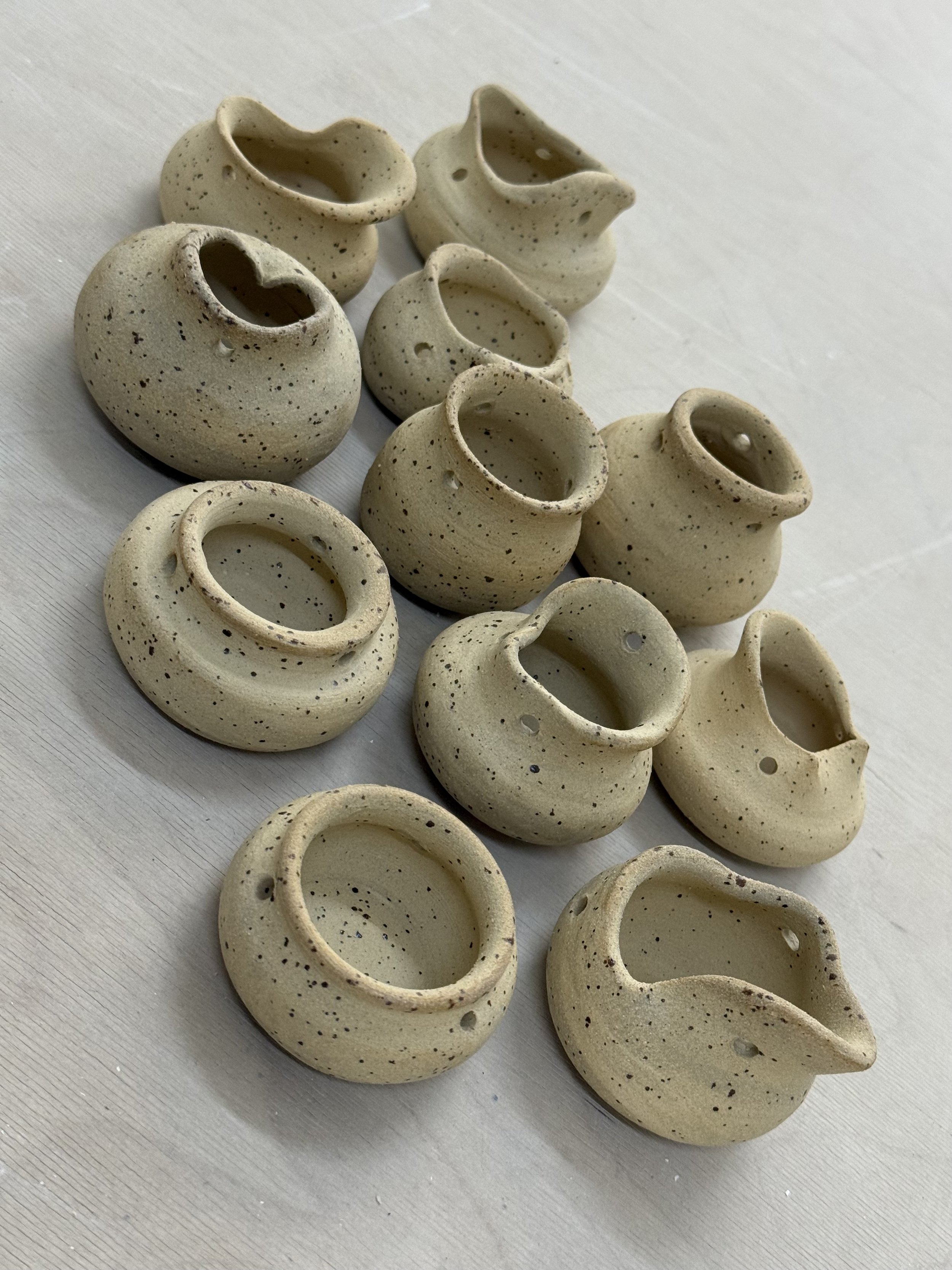
This project begins with a gift.
When I was a child living in Russia, I once sat with an old potter who pressed a small vessel into my hands and told me: fill it with water and make a wish, and when the water is gone, the wish will be granted.
For this project, I made eleven small vessels in that spirit, one for each of us, to carry through the coming moon cycle (September 11 to 26), passing the gift onward the way it was passed to me.
Each vessel is an invitation to a soft, private ritual at home. Fill it with water and a wish, and then do with it whatever feels right: watch the water evaporate, pour it out, drink it, bathe in it, or let it sit under the moon and keep adding more so that it never empties. There is no correct way, and no end to reach.
This is where the artwork becomes as intimate as it can be — a performance with no audience, no stage, and nothing that needs to be witnessed or shown. There is no evidence to produce, nothing to document, no proof it happened. A kind of soft anarchy: the work dissolving out of the gallery and into private life, unobserved, unrepeatable, and complete in itself.
The invitation, from me and from the vessel, is hope — moving through tides of reflection and anticipation, manifestation and release, gratitude and grief, tenderness and resilience.
Our watery eclipse is on its way.
The Vessel Does Not Empty: Poison and Post-Dystopian Hope in Apocatastasis Votum
Helen Hines DYSTOPIA Sound Art Biennial, Floating University Berlin, 2026
I. An Offering at the Edge of a Poisoned Pond
There is an oral tradition — undocumented, passed to me by hand — in which one fills a vessel with water and a wish, and waits. When the water is gone, the wish is released. I received this tradition the way traditions are properly received: not from an archive but from a person, a potter, who pressed a small vessel into my hands and told me what it was for. Apocatastasis Votum continues an oral folk practice, and in continuing it, alters it.
The alteration is this: the vessels cannot hold water. They are cracked, malformed, porous — made of hypertufa and both fired and unfired clay on the dock of the Floating University’s retention pond, a body of water that is at once toxic industrial runoff and legally protected urban habitat. To bring a wish to these vessels is to bring it to something structurally incapable of keeping it. The water has nowhere to stay. The wish has nowhere to be held.
I want to propose that Apocatastasis Votum stages a specific structure of feeling — what I will call post-dystopian hope — through nested impossibilities and a single unbearable equivalence between restoration and dissolution. And I want to situate the work within the theoretical framework I have been developing under the name necromaterialism: an account of grief in which things, people, and places are always becoming otherwise, moving forward into the unpredictable while listening to what is behind them.
II. Site as Hyperobject: The Pond That Cannot Be Touched
The retention pond at the Floating University is a co-author of the work. Collected rainwater runoff from the surrounding urban fabric, the pond is contaminated by definition — it is where the city’s surfaces drain — and simultaneously it is a protected ecological habitat, a haven for the very organisms that the contamination might be expected to exclude. It is, in Donna Haraway’s sense, a natureculture: a knot in which the natural and the cultural, the polluted and the thriving, cannot be separated into clean categories.(1)
Timothy Morton’s concept of the hyperobject is useful here, though I want to press it toward the specific.(2) The pond is a small hyperobject, or a node in a larger one: massively distributed in the hydrological cycle, viscously adherent (there is no “away” for the water; it circulates and returns), and interobjective — legible only through its effects on the other objects that share its space.
III. The Three Impossibilities
The wish made at these vessels cannot come true, and it cannot come true in three distinct registers, each nested inside the last.
The structural impossibility. The vessel is cracked. It cannot hold water. The wish, which requires the water’s slow departure to be released, has no water to depart because the water departs immediately, through the fault, into the porous body, into the ground. The mechanism of the tradition is broken at the level of the object.
The chemical impossibility. Suppose the vessel could hold. Evaporation — the mechanism by which the wish is said to be freed — does not purify. It concentrates. When water leaves a contaminated solution, it takes nothing with it; it rises clean and leaves everything behind. The salts remain. The metals remain. The poison remains and grows more concentrated with every molecule of water that escapes into the air. The very process that is supposed to release the wish is the process that distills the toxin to its most potent form, ringing the vessel’s interior with residue. What the tradition promises will remain when the water goes is freedom. Chemistry answers that what remains is the concentrate of everything the water was carrying.
The ontological impossibility. Suppose, further, that one could stand cleanly outside the contamination to make a clean wish. One cannot. The body is water — a “big flesh sack full of water,” continuous with the pond, drinking it, weeping it, made of it. This is Astrida Neimanis’s hydrocommons: there is no membrane at which the self ends and the poisoned water begins.(3) The wisher and the water are not separate enough for the wish to be about the water. The wish is water wishing about itself. When one sings into a vessel and pours it into the central body, water pours water into water. There is no uncontaminated position from which to pray.
Three impossibilities, nested: the object cannot hold, the process cannot free, the subject cannot stand apart.
IV. The Pharmakon and the Gift
Beneath the three impossibilities runs a single equivalence that the German language hands over whole. The votive offering — the Gift laid at the shrine, the present given to a god in advance of a favour — is, across the seam of German and English on which this work sits, the same word as poison. What one offers at the shrine is poison. The gift and the toxin are one substance, one water.
This is Jacques Derrida’s pharmakon made literal and material.(4) In “Plato’s Pharmacy,” Derrida shows that the pharmakon is undecidably remedy and poison, cure and harm, and that this undecidability is not a problem to be resolved but the condition of the thing itself. The water that carries the wish is the water that dissolves. The central vessel — the Votum proper — is both source and drain: the wish-water leaves it, travels through a network of tubes into the smaller vessels, is released as drip and seep and overflow, and returns to where it began. It moves without knowing where to land, lost along the way, never leaving the work and never settling inside it. The circulation is the gift and the poison moving through the same tubes, indistinguishable, because they were never two things.
Here I want to mark a productive tension within the work. The pharmakon is the both/and — poison and cure, the consoling doubleness in which the harmful thing is also the healing thing. But there is a voice that refuses this consolation (from my process notes):
It is not so poetic. It is just a mineral. A solvent. Fire is not so destructive — fire transforms things from one molecule to another. But water destroys. It only destroys.
Fire is alchemical; it turns one molecule into another, a transmutation, a becoming. Water does not transform. Water dissolves — it returns the structured thing to undifferentiated solution, to the state before form. In this voice’s cosmology the water is not a pharmakon at all but pure solvent, pure un-making, and the refusal to grant it the consoling doubleness is the voice’s integrity. The work holds both the theological consolation of the pharmakon and the drowning voice that will not accept it.
V. Dissolution as the Dark Apocatastasis
The title’s first word names a heresy. Apocatastasis — the doctrine, condemned by the early Church, that all things will finally be restored: every wound healed, every corruption reversed, even hell emptied, even the damned brought home. It is the ultimate re-membering, the putting-back-together of a broken world. Clean water. The pond as it was. The world as it was.
Dissolution is its exact opposite: the taking-apart, the un-structuring, the return of every distinct thing to formless solution. Restoration against dissolution. The miracle against the solvent.
And yet. In solution, all boundaries are gone. Dissolved into the one water, there is no longer any separation between the self and the poison, the wish and the pond, the body and the world — we swim together in this eternal soup. Dissolution is a reunion. It is everything made one again, every distinction erased, all things returned to a single body of water. Which is to say: dissolution is itself a form of apocatastasis. It is restoration-into-oneness achieved by annihilation. The solvent that unmakes the self is also the medium that ends the self’s separation from everything else.
This is the conceptual pivot of the entire work. The apocatastasis the piece prays toward and the dissolution the water performs are one motion, seen from two positions. The difference between them is only whether one experiences the loss of boundaries as salvation or as drowning. The Votum holds the wish in the condition of permanent almost precisely because it cannot decide which one it is. The chamber does not empty because it cannot resolve.
VI. Necromaterialism: Listening Forward While Facing Back
I have named my broader theoretical project necromaterialism: an understanding of grief not as an emotion to be processed toward closure but as an ontological stance, in which things and beings and places are always becoming otherwise — moving forward into the new and the unpredictable while listening, attentively, to what has passed. It is a materialism because it locates this becoming in matter itself: in the dissolving cement, the concentrating silt, the circulating water. It is necro- because it takes loss, decomposition, and rot as generative rather than merely terminal. It shares its ground with the feminist new materialisms of Karen Barad, Jane Bennett, and Anna Tsing — matter as agential, vibrant, entangled — but it turns that ground toward mourning, and toward listening as the mode in which the living attend to the dead and the not-yet.(5)
Apocatastasis Votum is a necromaterialist object in this precise sense. It is made of materials that are themselves in dissolution. Hypertufa is a precipitate of cement out of water, cured by hydration over days and weeks and slowly, over decades, decomposed by the same water back toward the sludge it came from. The vessels are already cracked. The work is not a stable object depicting dissolution; it is itself dissolving, on a slower clock than the body’s but the same clock. To make it was not to build a monument but to stage a return to the soup, at the edge of the water that will complete it.
VII. The Un-Witnessed Rite
On the opening evening the sculpture was activated not by a performance but by a rite. Eleven FLINTA/AFAB voices, each having tended a small vessel of water through a full moon cycle, gathered at the dock and let their private lullabies dissolve into a shared pool of voice. Each had spent a month in an entirely private ritual — telling wishes to the water, letting it sit under the moon, adding more so that it never emptied.
I want to claim something specific about the form of this rite, which I think of as a kind of soft performance anarchy. The month-long private ritual has no audience, no stage, no documentation, nothing that must be witnessed or shown. There is no evidence it happened. It is a performance deliberately designed to be un-witnessed — which runs against nearly everything performance is usually asked to be. The work dissolves out of the gallery and into private life, unobserved, unrepeatable, complete in itself. The gift I received from the potter I have passed onward, hand to hand, with full permission for a wholly private experience. The maintenance of the work — the daily refilling of the Votum against evaporation, the tending of the moon-vessels — is the ritual: the continual re-paying of a debt that can never be discharged, the restoration that must be performed again and again because it never completes on its own. That is the apocatastasis, enacted: a restoration one keeps performing precisely because one knows it cannot arrive.
VIII. Post-Dystopian Hope
I began with a structure of feeling and I want to end by naming it precisely. Post-dystopian hope is not optimism. It is not the expectation that the favour will come, the pond will be clean, the world restored. It is the decision to make an offering from inside the solvent that is unmaking you — knowing the gift is poison, knowing evaporation concentrates rather than frees, knowing you are water wishing over water.
All I can do is try not to sink.
Then, from inside that sinking, the invitation is extended anyway — and still, you are invited to bring your wish to the water. The invitation rises out of the drowning. To wish through surrender is to hold the whole ache in two hands and open the hands at the same time; to want everything and keep nothing; to let the small vessel empty you into the world.
The chamber does not empty. The wish is held in permanent almost. One makes it knowing it cannot come true — and makes it anyway, which is the only kind of hope left worth the name at the edge of a poisoned and protected pond, in a natureculture that is dying and thriving at once, made of the same water we are.
Works Cited
1: Donna J. Haraway, Staying with the Trouble: Making Kin in the Chthulucene (Durham: Duke University Press, 2016). See also Haraway, The Companion Species Manifesto (Chicago: Prickly Paradigm Press, 2003), for the coinage of natureculture.
2: Timothy Morton, Hyperobjects: Philosophy and Ecology after the End of the World (Minneapolis: University of Minnesota Press, 2013).
3: Astrida Neimanis, Bodies of Water: Posthuman Feminist Phenomenology (London: Bloomsbury, 2017). See also Alexis Pauline Gumbs, Undrowned: Black Feminist Lessons from Marine Mammals (Chico: AK Press, 2020).
4: Jacques Derrida, “Plato’s Pharmacy,” in Dissemination, trans. Barbara Johnson (Chicago: University of Chicago Press, 1981), 61–171. On the gift, see also Marcel Mauss, The Gift: The Form and Reason for Exchange in Archaic Societies, trans. W. D. Halls (London: Routledge, 1990).
5: Karen Barad, Meeting the Universe Halfway: Quantum Physics and the Entanglement of Matter and Meaning(Durham: Duke University Press, 2007); Jane Bennett, Vibrant Matter: A Political Ecology of Things (Durham: Duke University Press, 2010); Anna Lowenhaupt Tsing, The Mushroom at the End of the World: On the Possibility of Life in Capitalist Ruins (Princeton: Princeton University Press, 2015).
Bibliography
Barad, Karen. Meeting the Universe Halfway: Quantum Physics and the Entanglement of Matter and Meaning. Durham: Duke University Press, 2007.
Bennett, Jane. Vibrant Matter: A Political Ecology of Things. Durham: Duke University Press, 2010.
Derrida, Jacques. Dissemination. Translated by Barbara Johnson. Chicago: University of Chicago Press, 1981.
Gumbs, Alexis Pauline. Undrowned: Black Feminist Lessons from Marine Mammals. Chico: AK Press, 2020.
Haraway, Donna J. Staying with the Trouble: Making Kin in the Chthulucene. Durham: Duke University Press, 2016.
LaBelle, Brandon. Acoustic Territories: Sound Culture and Everyday Life. New York: Continuum, 2010.
Mauss, Marcel. The Gift: The Form and Reason for Exchange in Archaic Societies. Translated by W. D. Halls. London: Routledge, 1990.
Morton, Timothy. Hyperobjects: Philosophy and Ecology after the End of the World. Minneapolis: University of Minnesota Press, 2013.
Neimanis, Astrida. Bodies of Water: Posthuman Feminist Phenomenology. London: Bloomsbury, 2017.
Oliveros, Pauline. Deep Listening: A Composer’s Sound Practice. New York: iUniverse, 2005.
Schafer, R. Murray. The Soundscape: Our Sonic Environment and the Tuning of the World. Rochester: Destiny Books, 1994.
Tsing, Anna Lowenhaupt. The Mushroom at the End of the World: On the Possibility of Life in Capitalist Ruins. Princeton: Princeton University Press, 2015.